

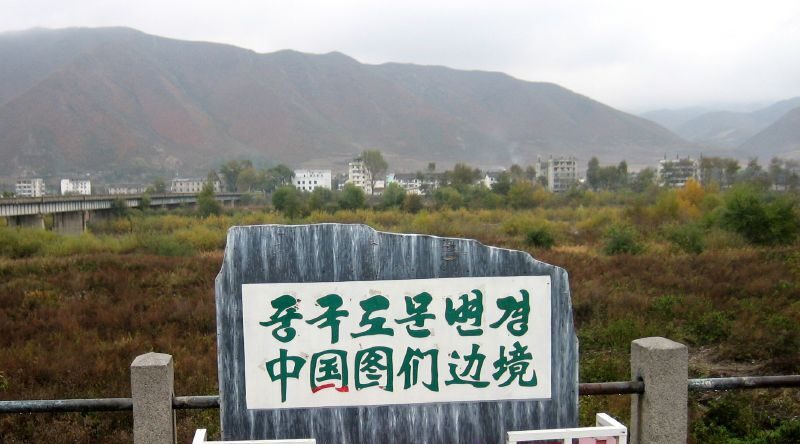
Speculation of the imminent restart of overland trade between North Korea and China after vehicles were spotted on the Sino-Korean Friendship Bridge linking Sinuiju and Dandong has fueled only a slight rise in North Korean exchange rates.
According to Daily NK’s regular survey of market prices in North Korea, the dollar was trading at KPW 8,300 in Pyongyang as of Aug. 20. Essentially, the rate remains unchanged from the last survey half a month ago on Aug. 6, when the dollar was trading at KPW 8,270.
The KPW-USD rates in Sinuiju, North Pyongan Province and Hyesan, Yanggang Province also experienced insignificant changes.
In Sinuiju, the dollar was trading at KPW 8,330 as of Aug. 20, while in Hyesan, it was trading at KPW 8,320, just KPW 50 and KPW 30 higher, respectively, than it was in the previous survey.
The yuan also held steady, with the Chinese currency trading in the KPW 1,200-1,300 range for the second straight month since June.
The yuan was trading at KPW 1,260 in Sinuiju and Hyesan as of Aug. 20, just KWP 10 and KPW 20 higher, respectively, than it was at the time of the Aug. 6 survey.
Crackdowns on money changers a factor in steady exchange rates
North Korea’s exchange rates have likely stayed more or less the same because of recent crackdowns on money changers in North Korea’s border regions.
Quoting a source in Yanggang Province, Daily NK recently reported that the authorities were intensifying crackdowns on so-called dondekko, or money changers, in Hyesan. North Korean authorities regard the very act of taking commissions for changing currencies as illegal, and the arrest of money changers is hindering the industry.
The government crackdown on money changers appeared to be aimed at preventing a sudden spike in exchange rates as a result of measures to expand trade, as well as a collapse in the value of the North Korean won. However, the crackdown may only be temporary because hindering money changers also has an impact on the flow of cash and private economic activities.
Meanwhile, North Korean authorities are espousing centralized trade even if full-scale overland trade were to resume, which suggests that there will not be a spike in demand for foreign currency.
“Even if overland trade expands, it won’t be easy for individuals to take part,” a source in North Pyongan Province told Daily NK. “Because trade permits will probably go first to state-licensed agencies, private individuals don’t feel like immediately going out to buy foreign currency to take part in trade.”
Translated by David Black. Edited by Robert Lauler.
Daily NK works with a network of sources who live inside North Korea, China and elsewhere. Their identities remain anonymous due to security concerns. More information about Daily NK’s reporting partner network and information gathering activities can be found on our FAQ page here.
Please direct any comments or questions about this article to dailynkenglish@uni-media.net.







