

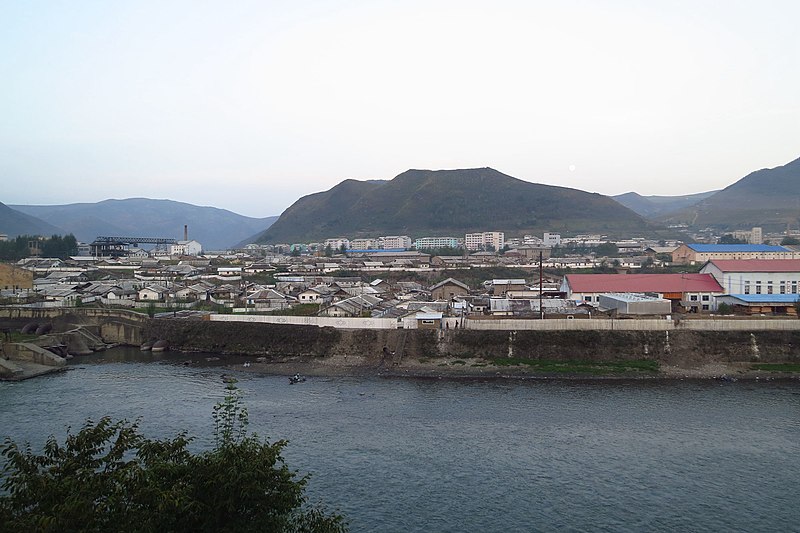
Two North Korean police officers got into a public shouting match outside Hyesan Station in November 2026 over a trader without a travel permit. The clash between a railway officer and a local officer drew a crowd and put a spotlight on police bribery at North Korea’s train stations.
The incident took place around midday on Nov. 12 outside the station’s ticket gate, a source in Ryanggang province told Daily NK on Wednesday. A local police officer on patrol spotted a trader moving a large load of goods. When the officer demanded to see a travel permit, the trader could not produce one.
North Koreans need a travel permit to leave their home city or county, and police check the documents at stations and checkpoints. A sweeping transportation law now bars people from boarding trains without a travel pass and identification. Hyesan, a border city across the Yalu River from China, has also seen repeated crackdowns on traders in recent years.
At North Korean train stations, the ticket gate marks the boundary between two police jurisdictions. Officers from the railway police department handle enforcement inside the gate, while local police keep order and carry out crackdowns outside it. Both forces belong to the Ministry of Social Security, North Korea’s national police agency.
The trader immediately called a railway police officer he knew and asked for help. The officer came to the scene and argued that the trader might simply have come out to collect a shipment. “Do you have any proof he arrived by train?” he asked his local counterpart.
The local officer fired back that the trader himself had said he came from Hamhung, the capital of South Hamgyong province. As the argument grew heated, the local officer threatened to report the matter to the railway police department. The railway officer insisted the trader had only stepped into the station on an errand. He then told the local officer to go ahead and file the report.
Police bribery suspected behind the clash, Hyesan residents say
As the two men raised their voices, the other railway officers on duty all came out of the station. Many people passing in front of Hyesan Station watched the scene unfold, and talk spread that the clash was really about bribes.
Onlookers believed the trader had in fact arrived by train, the source said. They mocked the railway officer’s defense of him with a Korean proverb about eating the chicken and then holding up a duck’s foot. The saying describes someone who brazenly denies what everyone can plainly see.
Some Hyesan residents also whispered that the trader had caught trouble for a simple reason. In their view, he had paid off the railway officer but given nothing to the local officer.
North Korean traders often cultivate ties with railway police or bribe them to ease travel permit checks and the movement of goods. Railway officials have long taken bribes to secretly carry merchants and their cargo on trains. A good relationship with a railway officer also makes it easier to visit nearby areas without a permit, the source explained. For that reason, traders work hard to stay on friendly terms with these officers.
A railway officer’s help offers little protection once a trader passes through the gate, however, because local police take over there. Some local officers reportedly wait outside the station and launch surprise checks on traders carrying heavy loads. Hyesan police have also staged sudden raids near the train station that critics say aim mainly to collect bribes. As a result, many traders bribe or court local officers separately as well.
The source said this system of payoffs lay behind the friction between the two officers. The local officer, after all, had stopped a trader whom the railway officer had already waved through. North Korean authorities have periodically targeted corruption within railway agencies, but the practice has persisted.
The incident has fueled criticism in Hyesan of police officers who abuse their enforcement powers to extract bribes from traders. “If they had been senior officials, they would never have fought in public over a trader’s goods,” the source said. “By shouting at each other in front of a busy station, the officers only ended up embarrassing themselves.”
This article was originally written in Korean and translated with the help of generative AI tools. It was then edited by a native English-speaking editor. All AI-assisted translations are reviewed and refined by our newsroom.
Daily NK operates networks of sources inside North Korea who document events in real-time and transmit information through secure channels. Unlike reporting based on state media, satellite imagery, or defector accounts from years past, our journalism comes directly from people currently living under the regime. We verify reports through multiple independent sources and cross-reference details before publication.
Our sources remain anonymous because contact with foreign media is treated as a capital offense in North Korea — discovery means imprisonment or execution. This network-based approach allows Daily NK to report on developments other outlets cannot access: market trends, policy implementation, public sentiment, and daily realities that never appear in official narratives.
Maintaining these secure communication channels and protecting source identities requires specialized protocols and constant vigilance. Daily NK serves as a bridge between North Koreans and the outside world, documenting what’s happening inside one of the world’s most closed societies.








