
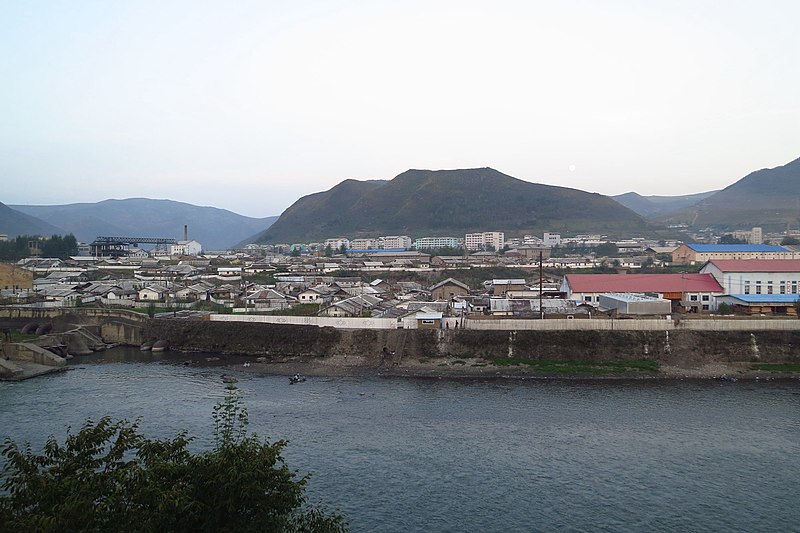
Police in Hyesan, Ryanggang province, recently launched surprise accommodation inspections targeting households in several neighborhood watch units. However, the inspections were designed primarily to line officers’ pockets with bribes rather than effectively prevent people from running illegal lodgings.
“Police in Hyesan recently conducted accommodation inspections in neighborhoods near the train station and where private taxis pick up passengers,” a Daily NK source in Ryanggang province said recently. “Many people got caught in the sudden, unannounced crackdown.”
According to the source, the number of people earning money by renting out their homes as lodgings has surged in the border city of Hyesan alongside the growth of private taxi services that carry passengers to and from interior regions of the country.
In response, Hyesan police launched surprise inspections to crack down on illegal lodgers and people operating unlicensed accommodations.
On Aug. 9, Hyesan police conducted surprise late-night raids focused on the Hyesong and Hyejang neighborhoods, where such lodgings are reportedly common.
During the raids, police rounded up not only people running illegal lodgings but also households temporarily housing visitors from other areas. Those caught in the raids were immediately taken to police boxes or neighborhood police stations.
“About 50 people were hauled off to a police box in just one neighborhood,” the source said. “Most were sent to temporary holding facilities.”
“You could get out if you had connections with Hyesan city officials or the police, but people without such connections were stuck until police from their home regions came to collect them,” he explained.
Travel paper violations drive arrests
Most people busted in the inspections had violated regulations related to travel papers. In North Korea, citizens must obtain travel papers to leave their place of residence for another region. They must also register their accommodation with the local neighborhood watch unit head and police upon arrival.
Registering with the neighborhood watch unit head is relatively straightforward, but getting a stamp from the local police station or police box typically requires a bribe of at least one carton of cigarettes.
Because of this burden, some people either skip getting travel papers altogether or reuse expired ones.
They also use private taxis to bypass checkpoints when traveling to other regions, even though it costs more money.
“People without travel papers mostly come to Hyesan for business—things like commerce or transporting goods,” the source said. “Some reuse old travel papers or deliberately avoid getting a police stamp when they arrive.”
In North Korea, renting out one’s home to people from other regions for money is illegal, but many people secretly do it anyway, flying under the police radar.
Few people stay at state-run lodgings because guests need travel papers, and the accommodations are awful.
Many people prefer the relatively convenient and cleaner lodgings in private homes, and this demand has fueled the growth of privately-run accommodations.
“Since the police officers launching the crackdown are fully aware of this situation, many simply collect bribes after warning violators instead of actually arresting them,” the source said. “Ultimately, the inspection was about filling the police’s pockets.”
“It’s become routine for inspectors to collect more bribes by busting more people, and for those at risk of crackdowns to buy their way out through bribes,” he said. “The latest crackdown was just for show.”
The inspection also swept up Hyesan residents who were visiting relatives in other neighborhoods within the same city but failed to register where they were staying. However, such people were sent home immediately after police confirmed their identities.
“It’s incredibly inconvenient to have to register where you’re staying if you’re not sleeping at home, even when you live in the same city,” the source said. “Many people say they hope the day comes when they can freely travel within the country like in other nations, even if they can’t travel abroad.”