

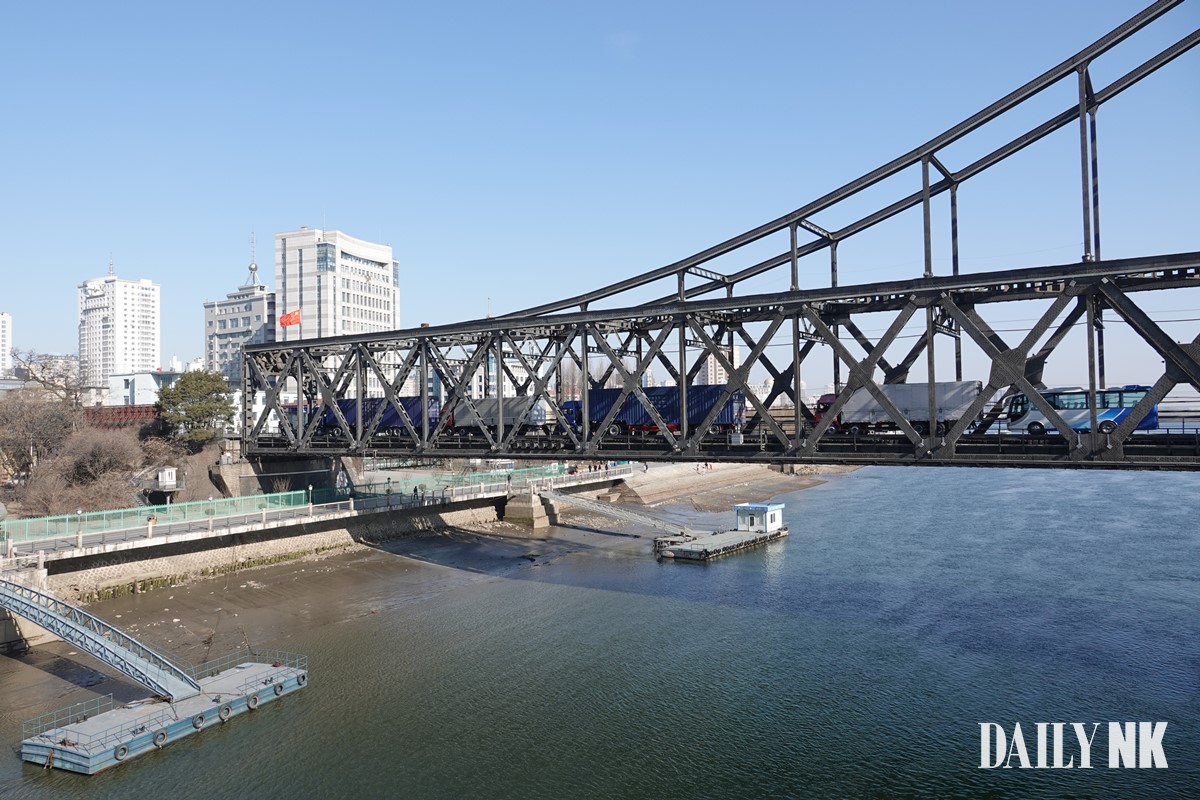
On the back of a gradual rise in North Korean exports into China, the DPRK’s railroad authority recently increased transportation costs for international freight, Daily NK has learned.
According to a source in China last Wednesday, the cost to ship international freight by train from Sinuiju, North Korea to Dandong, China recently rose seven-fold.
As recently as late last year, it cost about RMB 500 (around USD 72) to ship 150 kilograms of freight to China. As of early February, however, it costs up to RMB 3,500 (around USD 509).
The source said that North Korea’s railroad bureau was behind the transport fee increase. The railroad authority explained that the fees had to rise due to additional costs associated with quarantine and inspections, cargo management and storage.
As recently as mid-January, North Korean authorities had not significantly raised their freight transportation rates.
However, the source said that with the authorities in North Korea and China agreeing to expand North Korean exports by freight train at the end of January, North Korea’s railroad authority hastily announced a plan to hike its transportation fees.
On the other hand, China has not raised transportation fees on cargo entering North Korea from China. The source said it still costs RMB 500 to send 150 kilograms of freight from the Chinese side into North Korea.
RATE HIKE TIES UP GOODS IN NORTH KOREA
Because of the recent rate hike, contract manufactured items that were supposed to be shipped to China in early and mid-February such as artificial eyelashes, wigs and beadwork reportedly remain tied up in North Korea.
Generally speaking, Chinese traders pay the costs of shipping supplies to North Korea, but North Korean traders pay the costs of shipping the finished goods assembled in North Korea to China. As a result, North Korean traders are having to take on all the additional costs due to the recent rate hike.
In fact, some North Korean trading companies that were supposed to ship their items to China in early February have responded to the rise in transport fees by delaying their shipments until after March.
The trading companies expect bilateral trade will expand somewhat while trade will diversify through sea and land transportation routes following the end of China’s “two sessions,” or lianghui, of the Chinese People’s Political Consultative Conference and National People’s Congress.
Transporting 150 kilograms of cargo by ship from North Korea to China currently costs RMB 300 to 500, but because contract manufactured goods like wigs and artificial eye lashes are official, state-approved export items, North Korean trading companies cannot arbitrarily borrow cargo ships to smuggle them to China.
However, if North Korean traders experience trouble in exporting items because of the hike in transportation costs, it could lead to a drop in foreign currency earnings for the regime.
As such, North Korean authorities may slightly lower transportation costs for railway freight or permit exports by train or ship from regions other than Sinuiju going forward.
Translated by David Black. Edited by Robert Lauler.
Please direct any comments or questions about this article to dailynkenglish@uni-media.net.







