
“I cut myself trimming frozen pollack. I was bleeding badly and it hurt a lot, but they just put a band-aid on it and I went back to work.”
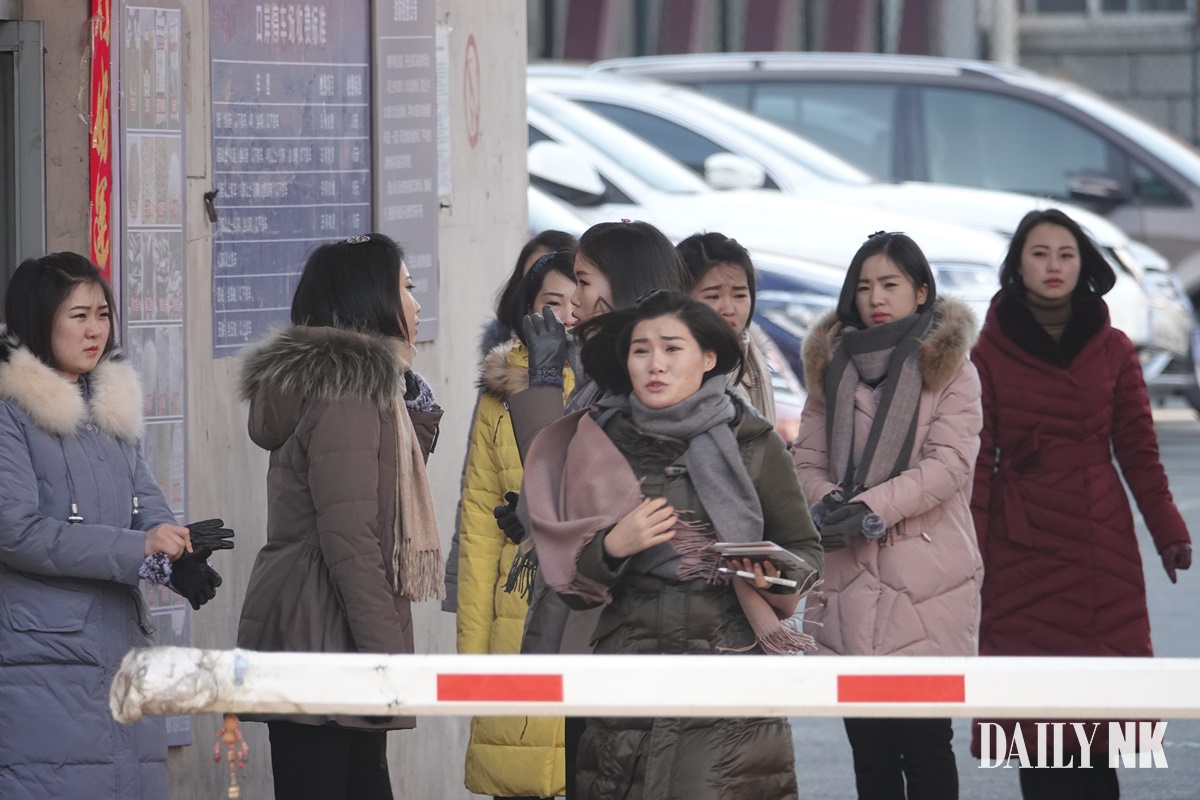
A North Korean worker at a seafood processing plant in Liaoning province, China, expressed her frustration when asked about working conditions. According to her, workers must pay for most medical treatment, so when they’re seriously injured, they quickly patch up their wounds and continue working.
Another North Korean worker at a seafood plant in China’s Jilin province shared similar experiences. She revealed how her workplace emphasizes “automated labor” – because the plant needs everyone working, laborers can’t stop even when injured.
Workplace injuries and inadequate medical care
Workers also reported that injured colleagues receive inadequate treatment – onsite medication is often expired, and wounds are bandaged after being disinfected with toothpaste. Accidents are hidden, and workers who speak up face threats of repatriation to North Korea.
For these North Korean workers, injuries don’t warrant rest. Even seriously hurt workers return to work after receiving minimal treatment. Rather than helping workers get proper care, North Korean managers on site mock them: “Why is it only you who gets hurt?” or “Why can’t you concentrate on your work?”
One worker described having to keep working despite serious bleeding, receiving little treatment. “My hand was bleeding badly, but they told me to keep moving boxes,” she said. “A coworker severely cut her finger with a knife, but they simply stopped the bleeding and made her work two more hours. The team leader said since the factory runs as an automated line, the whole team suffers huge losses if anyone stops working.”
Forcing injured North Koreans to continue working violates international standards for safety and health rights and constitutes severe human rights abuse equivalent to forced labor.
The factories lack basic medical supplies, with workers ultimately bearing treatment costs. “They have simple first aid supplies for minor wounds,” one worker explained. “They have headache or cold medicine, but it often runs out. You need to be burning with fever to be considered sick. A mild fever doesn’t count—they just tell you to deal with it.”
Another worker complained about poor medical care: “They have children’s band-aids and disinfectant, but they’re usually expired. We typically treat ourselves in our rooms after work with medicine we bought outside. Those who can’t afford that disinfect wounds with toothpaste and apply ointments.”
Concealment and consequences: How workers are silenced
Most accidents at these plants are concealed without official reports. “Even fatal accidents are often covered up, not to mention hundreds of injuries,” a worker stated. “Managers face punishment when their subordinates make mistakes, so they have no choice but to hide accidents.”
“No records are kept when your hand gets caught in a machine,” another worker said. “One worker’s hand was so mangled you could see the bones, but the team leader didn’t report it, calling it an individual mistake and saying individuals must pay for their own care abroad. The next day, he assigned the worker to a different job.”
Workers can’t even complain. “How can workers speak up to people who value their lives less than flies?” one asked. “They blame the complainers, telling them to just do the task.”
“Once, three people were injured in a single week. When they told the team leader, workroom leader, and manager that the work was too dangerous, they were threatened with being sent back to North Korea,” another worker revealed. “Afterward, everyone stayed quiet, even when hurt.”
One seriously injured worker was even forcibly deported. “A worker broke her wrist in an accident late last year,” a source explained. “Management decided to send her back to North Korea when they determined treatment would take too long.”
“She wanted to get treated quickly and continue working, even offering to pay the Chinese hospital bill herself, but the factory sent her to North Korea anyway, claiming they would have to cover the costs,” the source continued. “Repatriated workers receive only about half their earnings, with some taken away supposedly to compensate the factory for losses from the accident.”
According to Daily NK’s North Korean sources, authorities ordered officials not to help overseas workers with medical costs, stating that treatment fees for workers abroad aren’t the state’s responsibility.
Experts say this situation “exemplifies structural forced labor, with workers completely stripped of their rights to safety and health according to international standards.”
Ryu Ji Sung, a Korea Legislation Research Institute researcher, told Daily NK that forcing North Korean workers to work while injured “goes beyond a simple labor issue and could become a human rights problem requiring international attention.” He suggested raising awareness through U.N. Human Rights Council reports, Korean Peninsula forums, the National Human Rights Commission, the Korean Bar Association, and other channels, eventually spreading knowledge about these forced labor conditions more widely through the U.N. General Assembly or Human Rights Council.
“While North Korea hasn’t joined the International Labor Organization’s convention banning forced labor, it did join the convention on freedom of association, so the international community could respond in principle,” Ryu noted. “North Korea rejects outside intervention based on non-interference principles, but since sanctions on North Korea prohibit forced labor by overseas workers, we could address this as both a sanctions violation and human rights abuse.”