Wives of power officials in North Korea’s Ryanggang province are fighting over lucrative artificial meat jobs in 2026, with their husbands’ rank in the local power department often deciding who wins, a source in the province told Daily NK on Nov. 9.
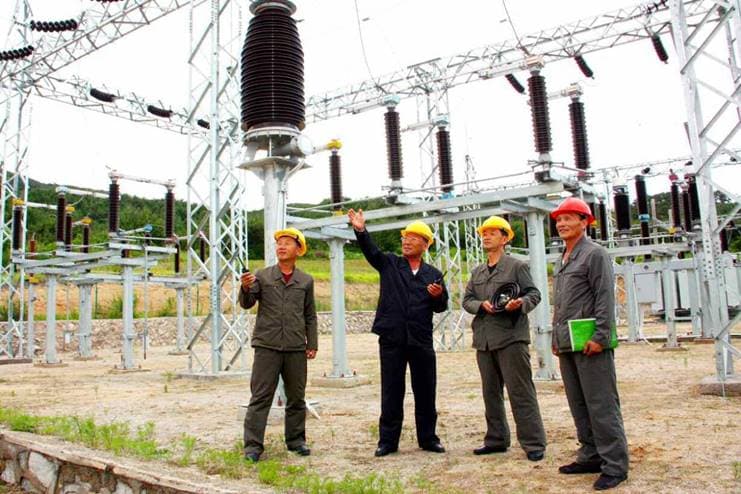
Each North Korean province has a power transmission and distribution department, and it decides which homes, factories and businesses get electricity and for how long. Chronic power shortages give its officials enormous leverage over everyday life. Hyesan households have even accused its inspectors of using electricity checks to extract bribes.
The latest feud broke out on Nov. 1 between the wives of two department officials fighting over a job at a small artificial meat workshop. Artificial meat is a chewy sheet made from soybean residue left over after pressing oil that spread as a protein substitute during the famine of the 1990s and remains a staple of North Korean street food.
The first woman worked at a state factory’s mill and noodle shop grinding grain and making noodles for the factory’s rest home and worker dormitories. She had already arranged to move to the artificial meat workshop and accepted money from someone else in exchange for her old post.
Her plans collapsed when the second woman, whose husband holds more clout, took the workshop job instead. The first woman was stuck at the noodle shop and had to return the money she had collected.
Furious, she went to confront her rival in person, and the two women traded threats and insults in an argument that nearly turned physical, according to the source.
Why power officials’ wives want artificial meat jobs
“Families of power department officials use their husbands’ control over electricity to land jobs at mills and artificial meat workshops,” the source said. “These are all places that simply cannot keep running without a steady supply of power.”
“Even among these families, the competition for the best-paying spots is fierce,” the source added. “This case shows that rivalry spilling out into the open.”
Noodle shop jobs at state factories involve heavy workloads but bring in little real income. Privately run artificial meat workshops, by contrast, are a very different story for workers. Steady demand from the jangmadang, North Korea’s private markets, keeps their orders flowing and earnings high.
Many private workshops operate under the name of a state enterprise and pay it a share of their profits. North Koreans have long paid bribes to land jobs at food processing factories for similar reasons.
“Artificial meat workers hand over only 30% of their earnings to the factory where they are registered,” the source said. “They keep the rest, so they never have to worry about putting food on the table.”
“Market traders these days struggle to earn enough for a single day, so these workers are sitting on a golden cushion,” the source continued. “That is why she tried to leave the noodle shop for the artificial meat factory.”
The feud shows how North Korea’s electricity crisis under Kim Jong Un has turned access to power into a currency of its own. Wealthy households and officials have long paid power distribution stations to divert electricity to their homes. Some families even pay the distribution department to keep the lights on for weddings and other special occasions.
This article was originally written in Korean and translated with the help of generative AI tools. It was then edited by a native English-speaking editor. All AI-assisted translations are reviewed and refined by our newsroom.
Daily NK operates networks of sources inside North Korea who document events in real-time and transmit information through secure channels. Unlike reporting based on state media, satellite imagery, or defector accounts from years past, our journalism comes directly from people currently living under the regime. We verify reports through multiple independent sources and cross-reference details before publication.
Our sources remain anonymous because contact with foreign media is treated as a capital offense in North Korea — discovery means imprisonment or execution. This network-based approach allows Daily NK to report on developments other outlets cannot access: market trends, policy implementation, public sentiment, and daily realities that never appear in official narratives.
Maintaining these secure communication channels and protecting source identities requires specialized protocols and constant vigilance. Daily NK serves as a bridge between North Koreans and the outside world, documenting what’s happening inside one of the world’s most closed societies.