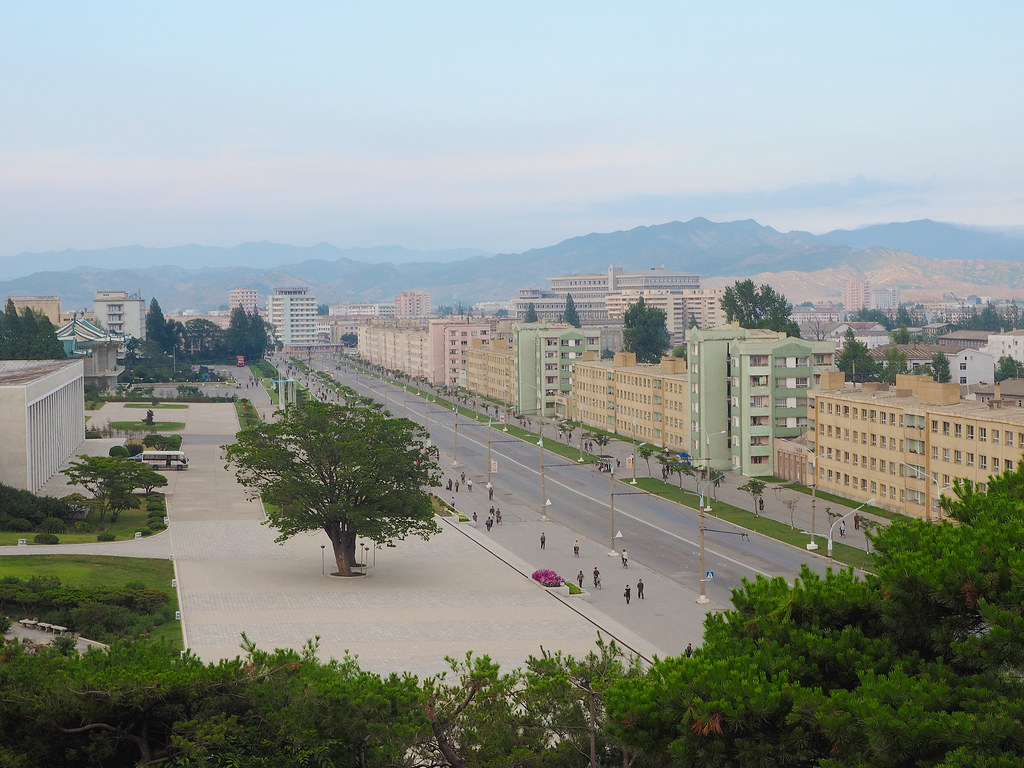
North Korean police in Hamhung launched surprise printer inspections in early November 2026, checking whether state agencies and enterprises have installed mandatory print logging devices. The printer crackdown aims to stop internal documents from leaking and to keep state equipment out of illegal moneymaking schemes.
Officers from Hamhung’s branch of the Ministry of Social Security have been dropping in on workplaces with printers since the start of the month, according to a source in South Hamgyong province on Monday. The Ministry of Social Security serves as North Korea’s national police force, handling criminal investigations, residence registration and routine surveillance.
The government requires every workplace that runs a printer to install a device that logs each print job. Many workplaces have delayed installation, however, because they must cover the cost from their own budgets.
On Nov. 3, officers burst into a factory in Hamhung to check whether the device was in place. The factory had installed one properly and passed that test. The officers still went through the stored print records line by line, however. They also demanded to know why the factory had printed specific documents.
The source said this focus on print histories reflects a push to keep internal documents from reaching outsiders. Pyongyang has struggled for years to contain secret leaks, even within its own security agencies.
“As more workplaces bring in computers and printers, the crackdown keeps getting stricter,” the source said. “Orders often come down to supervise printing closely so that secrets do not leak through illegal printing.”
The source added that officials face harsh consequences when violations surface. “If anyone prints classified material without permission, the officials in charge of that unit lose their posts, no matter the reason,” the source said.
The inspections fit a broader pattern of North Korea surveillance over electronic devices. In 2023, authorities raided print shops and photo studios across North Hamgyong province. This year, they also ordered DVD player owners to register their machines with the state.
Counterfeit drug labels drive the printer crackdown
Similar inspections are underway across North Hamgyong province, according to another Daily NK source there.
“Social security officers are inspecting workplaces with printers in Hoeryong and Chongjin as well,” the source said. “The goal is to stop leaks of material and also to block people printing fake trademarks for illegal business.”
Some North Koreans who sell counterfeit medicine print fake labels so their products look genuine, the source said. Authorities tightened the crackdown after learning that sellers had used printers at state agencies and enterprises to make those labels.
“Fake medicine has been sold in markets for decades,” the source said. “Now even labels and instructions for drugs said to be reserved for central party officials are forged so well they are hard to tell apart. Computers and printers have made fake labels easier to produce, so the crackdown keeps getting tougher too.”
Counterfeit drugs remain a chronic problem in North Korea’s jangmadang, or private markets. Soaring medicine prices there already put treatment out of reach for many North Korean families. Fakes of so-called “medicines from Ponghwa” also circulate widely in markets around the country. The name refers to a Pyongyang clinic that serves the country’s top officials and their families.
This article was originally written in Korean and translated with the help of generative AI tools. It was then edited by a native English-speaking editor. All AI-assisted translations are reviewed and refined by our newsroom.
Daily NK operates networks of sources inside North Korea who document events in real-time and transmit information through secure channels. Unlike reporting based on state media, satellite imagery, or defector accounts from years past, our journalism comes directly from people currently living under the regime. We verify reports through multiple independent sources and cross-reference details before publication.
Our sources remain anonymous because contact with foreign media is treated as a capital offense in North Korea — discovery means imprisonment or execution. This network-based approach allows Daily NK to report on developments other outlets cannot access: market trends, policy implementation, public sentiment, and daily realities that never appear in official narratives.
Maintaining these secure communication channels and protecting source identities requires specialized protocols and constant vigilance. Daily NK serves as a bridge between North Koreans and the outside world, documenting what’s happening inside one of the world’s most closed societies.