

As North Korea’s seasonal temperature swings intensify this spring, the number of cold and flu cases in Ryanggang province has surged. But for most North Korean people, getting sick means one thing: suffering through it alone.
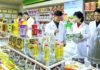
A Daily NK source in Ryanggang province reported Thursday that sharp daily temperature swings in Hyesan have driven a significant rise in cold cases in the city. Visiting a hospital costs more than most households can spare, the source said, and pharmacies rarely stock the medicines people need. What is available at the jangmadang (markets) carries prices that put treatment out of reach for the majority of North Korean people.
“Most people with colds just give up on treatment entirely,” the source said.
According to the source, a single vial of penicillin is currently trading at around 160,000 North Korean won on the Hyesan jangmadang. A packet of six paracetamol tablets runs approximately 130,000 won, while a 10-tablet strip of aspirin sells for around 22,000 won. Cheap by comparison, aspirin nonetheless costs about the same as one kilogram of rice, placing even basic fever relief beyond easy reach for families already struggling to eat.
“In a household where a kilogram of rice is precious, would anyone spend that on aspirin?” the source said. “The general mood is to endure the pain rather than spend money on medicine.”
Counterfeit drugs and a crackdown that drives prices higher
With formal medical channels failing to deliver, many Hyesan residents are turning to folk remedies such as saltwater gargles and simply waiting out their illness. Imported medicines are also sold at the jangmadang under informal labels like “Chinese medicine,” “German medicine,” and “UN medicine,” but a widespread reputation for ineffectiveness has pushed North Korean people to seek domestically produced drugs instead.
Domestic medicines, however, are not only scarcer but increasingly expensive. Some circulating on the market are counterfeit or have been diverted illegally from state supply chains. Authorities have responded with intensified enforcement, and the crackdowns themselves are pushing prices even higher.
“People who trust domestic medicine want to buy it, but the crackdowns have made prices climb further,” the source said. “Sometimes you want to buy it and simply can’t.”
Public frustration is mounting. The source pointed to a structural failure at the root of the problem: medications like penicillin and mycillin are simply not being supplied in adequate quantities to hospitals and pharmacies in the first place. What little does reach the market flows predominantly to those with money, while North Korean people without means are left to absorb their illness and move on.
“The fact that drugs like penicillin and mycillin aren’t being properly supplied is the core problem,” the source said. “Even when you go to a hospital or pharmacy, you often can’t get medicine. Some drugs leak into the jangmadang where only those with money can get them. For people in difficult circumstances, enduring the pain is becoming the only option, and that pattern is becoming entrenched.”
North Korean authorities have promoted what they call a “healthcare revolution,” promising to expand medical infrastructure, achieve pharmaceutical self-sufficiency, improve distribution systems, strengthen medical personnel capacity, and upgrade science-based healthcare. On the ground, however, access to treatment continues to depend heavily on individual economic circumstances, and the gap between state rhetoric and daily reality shows no sign of narrowing.
Reporting from inside North Korea
Daily NK operates networks of sources inside North Korea who document events in real-time and transmit information through secure channels. Unlike reporting based on state media, satellite imagery, or defector accounts from years past, our journalism comes directly from people currently living under the regime. We verify reports through multiple independent sources and cross-reference details before publication.
Our sources remain anonymous because contact with foreign media is treated as a capital offense in North Korea — discovery means imprisonment or execution. This network-based approach allows Daily NK to report on developments other outlets cannot access: market trends, policy implementation, public sentiment, and daily realities that never appear in official narratives.
Maintaining these secure communication channels and protecting source identities requires specialized protocols and constant vigilance. Daily NK serves as a bridge between North Koreans and the outside world, documenting what’s happening inside one of the world’s most closed societies.