

Today, the Korean Peninsula is faced with three pressing issues. Starting with the most urgent, the issues are: North Korean human rights, globalization and unification. By all means, the Korean people have to deal with the issues by themselves. In this rapidly changing globalized world, the international community too must pull its efforts together to address the issues.
The issues listed cannot be dealt with all together since each issue differs from one another in essence. However, they share one thing in common in that there is a precondition to be addressed. That is, North Korea must open its door for change. Unless North Korea carries out political and economic reform and establishes democracy and market economy, it will be difficult to resolve the nation’s human rights crisis and unify the Korean Peninsula.
Furthermore, unless North Korean issues are resolved, South Korea would not be able to fully use its political and economic capacity needed to advance the economy and become part of globalization. The situation in North Korea affects South Korean economy as it was the case during the time of the first nuclear crisis as well as the mass starvation period and 2006 nuclear test. In addition, consider the amount of financial expense needed by South Korea to reconstruct North Korea and integrate it into South Korea. Therefore, South Korea, for its own sake, must put its efforts together to bring change and reform to North Korea.
There are many ways to bring change and reform to North Korea. In order to devise concrete plans for change in North Korea, the upcoming Lee Myung Bak administration needs to cooperate with experts and NGOs who have been working for North Korea’s reform and open door policy, human rights, and democracy along with the international community interested in bringing the change to the country.
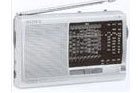
One effective way to bring about a change in North Korea is to support radio broadcast targeting North Korean listeners. History proves that radio is an effective means of facilitating a change in a closed society. For instance, radio played a key role in changing the minds of people in the former eastern bloc countries by delivering information from the outside world and arousing hope for change among the people. Had it not been a change brought by the radio, radical change which swept the former eastern bloc might not have taken place.
In order to maintain Kim Jong Il’s rule, the regime adopted three ruling methods. First, the regime monopolized the means of production including food production so that the very survival of the North Korean people lies in its hands. Second, the regime cut off information from the outside world and then systematically brainwashed its people into believing that Kim Jong Il is a god and their country is a heaven on earth. Third, Kim Jong Il completely removed all those whom he saw as a threat to his power through purges and violence.
The first method is no longer viable as the nation’s public distribution system collapsed after the food crisis in the mid 1990s. Since 2000, North Korea has become a country which cannot survive without international assistance and exchange. This situation can be used to undermine the regime’s efforts to control information. One of the most effective means to challenge the regime’s control of information is to extend the radio broadcast throughout North Korea.
“Voice of Korea” of the Korean Broadcasting System (KBS), South Korea’s public service broadcaster, has to create more radio programs targeting North Korean audience. In addition, more support should be provided for private radio stations dedicated to North Korean audience such as Radio Free Chosun, Free North Korea Radio and Open Radio for North Korea, all of which have been run without support from government. In fact, most private radio stations have been operating with no support from the government, and that is why they use foreign radio frequencies and transmitters. Even worse, they cannot provide radio programs with a high sound quality for their North Korean audience since they use a low radio transmitting power.
Private radio stations targeting North Korea should be allowed to use domestic frequencies and transmitters. Radio broadcast can be used to reveal the truth to the North Korean people that they live in not a utopian society and their harsh life can get better not through war but through the opening and reform of the country. The next South Korean government must support radio broadcast to North Korea as one of its key North Korean policies.








