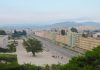
[imText1]On the 21st of November, I visited Changbai, China which faces Hyesan city, the capital city of Yanggang Province in North Korea.
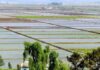
The downtown area of Hyesan rests under a bald mountain with numerous vegetable fields. Although the temperature was -7C, there was no smoke visible from the chimneys. Some residents had broken through patches of ice and were washing clothes in the river. Many of them were dipping their hands in the cold water without wearing any rubber gloves. These images painted a clear picture for me of what life was like for many North Koreans.
Hyesan city is made up of 25 towns and 4 villages. The towns are Hyesan, Hyehwa, Hyehung, Sinhung, Hyesin, Hyejeong, Hyemyung, Tapsung, Seonghu, Lyeondu, Gangan, Yungpung, Lyeonbong 1, Lyeonbong 2, Younghung, Songbong, Ganggu, Chundong, Masun, Hyetan, Hyejang, and Gumsan. The four villages are Unchong, Jangan, Sinjang, and Lojung. The population of Hyesan city is estimated to be 100,000-150,000, but reliable statistics are unavailable.
Hyesan city is home to the most outstanding monuments of the Kim Jong Il family. The monumental tower commemorating the Bochunbo battle, and the Kim Jong Sook Art Theater are brightly illuminated throughout the night. Construction of the Kim Jong Sook Art Theater was not halted even when thousands of people were dying of starvation and defectors continuously fled to China in 2000.
Mr. Kim, a Korean-Chinese trader doing business with North Korea, said, “Hyesan, on the China-Korea border, is where you can most vividly see the real North Korean lifestyle”. That is why North Korean authorities strictly control the border around Hyesan lest the outside world become privy to the realities of North Korea. The Chinese government also guards the border in order to keep North Koreans from contacting NGOs and missionaries and fleeing North Korea.
Mr. Kim said, “The number of North Korean defectors has increased a little since the Yalu river has frozen over, but more than a few of them have been repatriated to North Korea by the Chinese border guards.” According to Mr kim, it is easy to cross the Yalu river to reach Changbai, China, but it is difficult to reach Yanbian Province or other large Chinese cities from Changbai, as it is so remote.
“Residents of Changbai have long been aware of the miseries suffered by North Koreans,” Mr. Kim sighed.
“During the day, the two cities of Hyesan and Changbai exist across the Yalu river from each other. During the night, these two cities are fused into one. North Korean defectors, vendors, smugglers, soldiers, and many other people cross the river. For the past 10 years, it has been just like that everyday. The residents of Changbai no longer try to help North Koreans. They have come to dislike them. Some even report North Koreans to the authorities for 100 or 200 yuan. North Koreans beg, steal, and commit other crimes. We think North Koreans will not change as long as their government does not change. After all, the residents of Hyesan city have nowhere to go”, Mr. Kim commented.

|
| ▲ Some residents of Hyesan wash clothes in the river. |

|
| ▲ The water of the Yalu river is important for the residents. They take water to their houses. |

|
| ▲ Two North Korean soldiers with their rifles are watching the residents. |

|
| ▲ A North Korean soldier is meeting a man who is crossing the river from China while another soldier is looking around. |

|
| ▲ The man from China hands something to the soldier. |

|
| ▲ The man returns to China. |