

Pro-Kim Anti-Kim Leadership Debate
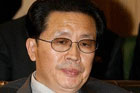
The best transitional power system after Kim Jong Il would be a collective leadership system which is centered on Jang Sung Taek, Director of the Ministry of Administration of the Chosun (North Korea) Workers’ Party.
Kim Gwang Jin, the Senior Researcher at the Institute for National Security Strategy, presented his thoughts at the academic seminar, “North Korea’s Third-Generation Hereditary Succession of Power,” which was sponsored by North Korean Intellectual Solidarity (NKIS) for the commemoration of its founding on the 24th. He stated, “North Korea’s regime change in the post-Kim Jong Il era will, more than anything else, be determined according to the standard of pro- or anti-Kim.”
Kim explained, “North Korea has an ‘automatic power succession system’ which does not recognize the legitimacy of policy, citizens’ support, and the democratic process, so no matter the form of the power succession, it will inevitably veer towards pro-Kim Jong Il because if that fails, there is no alternative but to convert to an anti-Kim power.”
He forecasted the pro-Kim succession scenarios thus: ▲ a third-generation hereditary succession within the Kim’s family ▲ a transitional power succession through a third-party, such as Jang Sung Taek, or ▲ a transitional succession through a collective leadership system. Only, he noted, “Power became significantly weakened during Kim Jong Il’s rule, and the prolonging of political power rooted in Kim Il Sung’s glory will not really translate to the next generation.”
Kim also emphasized, “If a third-generation succession is not feasible in an authoritarianism society such as North Korea, where the Kim father and son team are above even the status of god, then succession through a collective leadership system or a third party will be even more difficult. All three scenarios for succession are possible, but the possibility of their being successful is low and, if a pro-Kim regime comes in, it is highly likely that the authority will swiftly be handed over to an anti-Kim regime.”
He surmised, “A transitional succession to a collective leadership system centered on Jang Sung Taek, compared to other options, is the safest, and from the dimension of the North’s opening and reform or inter-Korea relations, progress can be expected.” He then added, “Even if Jang Sung Taek cannot completely deny the Kim father and son regime, better policy and the route of opening and reform which helps the civilians survive will enable the North Korean people to follow.”
Kim also predicted the anti-Kim political scenarios: ▲the collapse of North Korea and regime change after Kim Jong Il’s sudden death; ▲ a transition due to the founding of a pro-Kim regime; and ▲a regime change due to a coup d’etat.
He then pointed out, “If an anti-Kim Jong Il regime steps in, the possibility is high that the army will seize power. From now on, we have to prepare for this and pay attention to the North Korean People’s Army (KPA).”
Hyun In Ae, an NKIS representative who presented on the theme, “North Korea’s Self-Generation in the Case of An Emergency,” upheld, “The key reason for the legitimizing of the Sunshine Policy until now was to prevent the threat to South Korea’s and China’s security due to mass-defection or civil war. A change in the regime due to Kim Jong Il losing his position, however, will most likely not lead to such eventualities.”
When comparing North Korea with the Eastern European socialist nations, where coups or uprisings had taken place, he noted: ▲North Korean citizens have not been exposed to Capitalist ideology and culture ▲ there are no organizations in North Korea that are free from national power ▲ North Korean citizens are completely isolated from the outside world, and ▲considering that North Korea is not a one-party system, but a one-person ruling system which has been maintained for a long time, the possibility of an uprising is low.
Representative Hyun also forecasted regarding an emergency situation related to Kim’s loss of power: ▲there is currently no official second-in-command ▲ the main holders of power–the party and the KPA–are divided ▲ the entire population is strictly organized, so even in the absence of national leadership, the organizational system will operate for some time, and ▲ the possibility of an internal battle or a mass-scale defection is low given the lack of civilian or religious battle in the North.
Chae Kyung Hee, an affiliate with Hanawon, an education facility for defectors, who was one of the discussion members on the day, stressed, “North Korea still maintains the capacity to survive by itself and even in an emergency, it will not easily lose that. The most beneficial means for the both Koreas is to open the path, so that the North Korean leadership can facilitate a change in regime.”







