
North Korea has been sending prisoners released from correctional labor camps in Chagang Province after June of last year to agricultural villages outside the province, a practice the authorities plan to extend into the future, Daily NK has learned.
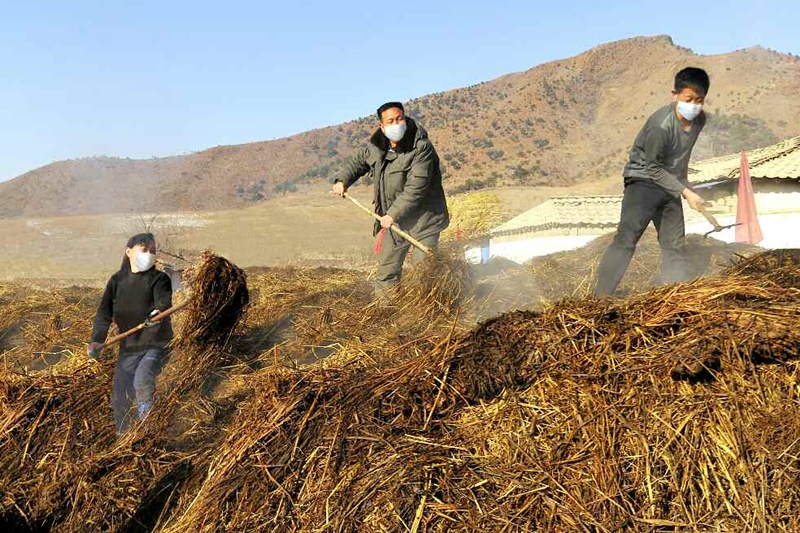
A source in Chagang Province told Daily NK on Tuesday that the Central Committee issued “an order regarding the placement of prisoners released from correctional labor camps in Chagang Province” to the Ministry of Social Security’s correctional bureau and to the ministry’s Chagang Province branch in November. After the order was passed on to camp correctional departments as well as to city, county and district resident registration departments under the Ministry of Social Security, released prisoners were sent to agricultural villages outside the province “in an organized way.”
The order, issued in the name of the Central Committee, called for all prisoners between the ages of 20 and 60 released from correctional labor camps after June 2020 to be sent to farms in provincial agricultural regions. This has reportedly sparked controversy as it includes people who had already rejoined society after being released from camps upon completing their terms.
North Korean authorities selected people released after June because village party committees had gotten word that some of the prisoners released after that month were engaged in slash-and-burn farming, which North Korean authorities forbid, or performing “anti-party acts” such as swearing bonds of brotherhood with one another.
The source said the authorities issued the order in response to criticism that “spiritual and ideological conditions of Chagang Province, a Special Songun Revolutionary Zone that many call a second capital, are gradually falling apart.” Accordingly, the party aims to “turn Chagang Province into a healthy place” by sending Chagang Province residents who commit crimes to agricultural regions in other provinces.
In accordance with the order, labor camps and city, county and district resident registration departments under the Ministry of Social Security weeded out the relevant individuals in November. The authorities carried out full-scale transportation of the individuals to agricultural communities from mid-December, said the source.
In fact, since receiving the order, correctional labor camps have not been releasing prisoners who have completed their terms into society. Instead, they are keeping them in mangibang – separate spaces within the camps for prisoners at the end of their terms – before transporting them to agricultural communities.
This means that despite completing their terms, these prisoners are being kept in the labor camps, living the same lives of confinement as before in mangibang while they await transportation out of the camp to the farms.
“Camp security personnel talk with the prisoners in the mangibang on an individual basis to find out if they have family or relatives in North Hwanghae Province, South Pyongan Province or South Hamgyong Province,” said the source. “The reason they ask these questions is so, whenever possible, the prisoners [can be sent] to agricultural communities in regions where they have family or relatives. However, when prisoners have no such connections, they get sent to agricultural communities in random provinces.”
Moreover, the city, county and district resident registration departments determined who rejoined society upon being released from labor camps after June and sent them to agricultural communities after revoking their “residency status” on their resident registration papers.
Last year, four released prisoners who had rejoined society in Chunggang County attempted to defect across the Sino-North Korean border out of fear that they would be sent to agricultural communities where they knew no one. At the border, however, they were shot by Storm Corps troopers.
“The two married couples in their late 20s and 30s were shot by the Storm Corps as they tried to cross into China and died immediately at the scene,” the source explained. “It was a big deal. Local residents saw what happened after they heard a stream of gunfire from the Storm Corps.”
Worried that other former prisoners may try to flee after the incident, the Chagang Province branch of the Ministry of Social Security hurried to complete the task before them. According to the source, the ministry completed transportation of former prisoners to farms outside the province by last Sunday.
The source said local residents first criticized the victims for trying to flee despite difficult times, but then felt sorry for them when they heard they did so because of the forced relocations.
“Locals are cowering, saying that if they do a stint in a disciplinary labor camp now, they’ll have to go to a remote farm when they get out, unable to live in their hometowns,” he added.