

Despite North Korea’s promises of an “agricultural revolution” announced at a key party meeting in late 2021, the country’s rural areas remain mired in poverty with inadequate food supplies and substandard living conditions—a reality that state media coverage of new housing construction and happy rural families systematically misrepresents.
“Many city residents believed the country was changing based on the new homes and bright lights in the countryside that they see every day on television or in the newspapers. But when they actually come to the countryside, they’re astonished by the awful reality of life there,” a source in South Pyongan province told Daily NK recently.
Many rural residents live in ramshackle homes that barely qualify as shelter, while their children walk around barefoot. The gap between propaganda and reality often astonishes urban visitors.
“There are still many people in the countryside with unpowered homes that leak in the rain and creak in the wind. These are people who know little about what is happening inside North Korea, let alone overseas. What sort of ambition could these adults, or even children, have for their lives?” the source said.
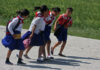
Photographs obtained by Daily NK show people in rural areas walking barefoot on dirt roads and children eating plain noodles with salt water in dimly lit homes that rely only on natural light. The images document the backward conditions in North Korea’s countryside, with no sign of children who have “nothing to envy in the world”—as state propaganda claims—or the happy families featured in government housing stories.

The reality behind the revolution
“There are kindergartens and other childcare facilities here, but it costs a fair amount of money to send children there. In rural areas, children are raised at home as long as they have someone to keep an eye on them. The children here don’t receive the dairy products or healthy food the government is supposed to be providing free of charge,” the source said.
North Korea’s agricultural revolution had two main objectives: solving food shortages through scientific farming methods and better rural infrastructure, and improving countryside living standards by upgrading housing and cultural facilities.
While North Korea’s propaganda focuses on scenes of rural development, countryside residents lack even basic guarantees of adequate housing, education, or medical care. “The chasm between city and countryside is evident in every area, including food, clothing and shelter,” the source said.