

[imText1]An atmosphere of peace in Northeast Asia surrounding the Korean Peninsula has been rapidly gaining strength.
Following the “October 3rd Agreement” of the Six Party Talks, which was to disable North Korea’s nuclear facilities within the year, the “October 4th Declaration” was produced. News of exchange of non-political areas between North Korea and the U.S. as well as U.S.’ humanitarian support to the North has been increasing.
In Shenyang, China on the 13th, a secret contact between North Korea and Japan was opened. Song Il Ho, North Korea’s envoy to Japanese Amity Negotiations and Japan’s Northeast Asia Chief apparently met in Shenyang. Progress in large-scale North-South economic cooperation has been made as well.
The possibility of establishing a resident representative team in Pyongyang and Washington next year was prematurely proposed. The actual possibility of implementation seems low, but the intent of “establishing a resident team” can be seen as creating an atmosphere of peace around the peninsula.
Such an atmosphere of peace will definitively continue until the end of the year, up to the deadline for the “disablement” of North Korea’s nuclear facilities. However, in the case that North Korea promises to “report all nuclear programs” at the Six Party Talks but refuses to report the amount of plutonium and nuclear weapons in its possession, there may be tension and change. But judging by the progress made so far, it is safe to assume that it will be difficult to reverse the flow of the “peace current.”
Though it is hard to predict when the positive atmosphere may suddenly change, depending on the progress made, it could continue through next year. If we clearly verify Kim Jong Il’s intent not to surrender his nuclear weapons, the situation can come to a standstill; however, the peace mood which has been culminated already cannot easily be deflated..
▲ U.S.-North Korea Relations = After North Korea disables nuclear facilities within the year and reports all nuclear programs, it can be predicted that the U.S. will remove North Korea from the list of terrorism-sponsoring countries and from the trade with an enemy state law. Already, expectations have risen that resident representative teams will be established in Pyongyang and Washington next year.
An exchange of non-political ideas between the two countries has begun. On the 6th, the North Korean Taekwondo Trial Team entered the 5-city performance tour, and the New York Philharmonic Orchestra has agreed to perform in Pyongyang in February of next year. A South Korean government authority said that the North Korean Women’s Soccer Team plans to visit the U.S. as well.
The U.S.’ humanitarian support of North Korea is showing signs of being resumed. The resolutions of U.S. Secretary of State Condoleeza Rice and Assistant Secretary Christopher Hill have been strengthened, so the atmosphere of peace between the U.S. and North Korea is expected to continue.
However, whether such an atmosphere of peace will help normalize relations between the U.S. and North Korea is not clear. Until now, the Bush administration has stressed that all things, including normalized relations between North Korea and the U.S., are possible if the North abandons its nuclear weapons. Immediately following the October 3rd agreement, rumors began circulating regarding the possibility of a visit to Pyongyang by Secretary of State Rice and have continued to spread since the conclusion of the Inter-Korea Summit. However, the U.S. plans to move forward only after seeing North Korea’s complete list of nuclear programs and verifying the disablement of its nuclear facilities.
▲ North Korea-Japanese Relations = The officials in charge of diplomatic normalization between North Korea and Japan held an unofficial conference in Shenyang, China. It is the first time since the moderate administration of Hukuda Yasuo that staff members from both sides have been in contact.
In accordance with the changes that have taken place in North-South and U.S.-North Korea relations, the direction of the Japanese government is also expected to change. It is feasible that the Japanese abductee issue, along with other pending issues between the two countries, such as an official apology for colonial policies, etc., will be discussed. However, the outlook is not too bright.
The Japanese government has requested a more intense investigation, the repatriation of all abductees, and the punishment of responsible parties; but on the contrary, North Korea has adhered to the position of “this matter has been already resolved.” Kim Jong Il is reported to have said at the October 2-4 Inter-Korea Summit Talks, “Besides the five who have returned to Japan, there are no abductees.”
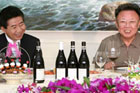
▲ North-South Relations = The “2007 North-South Korea Declaration,” which promises large-scale North-South economic cooperation and the “pursuit of a declaration to end the Korean War,” has been elevating the atmosphere of peace on the peninsula.
The South Korean ruling party has actively stepped forward in carrying out the “October 4th Declaration.” The Grand National Party, in regards to North-South Korea economic cooperation, has speedily promised cooperation from other parties. The five economic organizations, including Gwon Oh Gyu, the vice-Minister of Finance, are planning to send a large-scale delegation of 100~200 people to North Korea for field research in the beginning of December.
Talks of a “peace regime” have been proliferating as well. However, the U.S. has held onto the position that the declaration to end the Korean War is possible only after the abandonment of nuclear weapons, demarcating a clear difference with our administration.
The tension in South Korea is also at a climax. President Roh Moo Hyun’s statement, “The NLL is not a territorial line,” has drawn criticism.
As a whole, support and exchanges will actively continue, and U.S.-North Korea relations and Japan-North Korea relations will ride the wave of the mood of peace. However, the North Korean nuclear issue is still surrounded with land mines.









