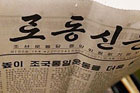
North Korean Workers’ Party mouthpiece Rodong Shinmun has asserted again that the reason why North Korea reexamined the functioning of the Kaesong Industrial Complex is that South Korea has failed to respect the North-South Joint Declaration of June 15, 2000.
In an article released on Friday, it explained, “We granted the rights to the Kaesong Industrial Complex, which is in a strategically important spot close to the Military Demarcation Line, to South Korea, while receiving low rent, wages and taxes, and providing several other good business management conditions. We acted in accordance with the principle of “Uriminzokkiri” (amongst our nation).”
“However,” it went on, “South Korea and America’s joint military drills like Key-Resolve continue to be carried out near the Kaesong Complex, and South Korea joined the Proliferation Security Initiative, which is equal to a declaration of war.”
“It is no wonder,” the article commented, “that we started reexamining preferential measures we gave to the South, since inter-Korean declarations are being ignored and we are on the verge of war.”
“While many South Korean enterprises entered the Kaesong Complex and earned great benefits, we have not received fair rent, wages or taxes. Based on the comprehensive principles of economic cooperation, this situation is unfair and unreasonable”
According to the Rodong Shinmun, North Korea demanded $300 wages for North Korean workers and $500 million rent because of the Lee Myung Bak administration’s negation of the June 15 Inter-Korean Joint Declaration.
On the contrary, however, President Lee announced in his opening address to a meeting of the National Unification Advisory Council last September and at the commemoration event for the March 1st Independence Movement this year that the administration would respect the former administration’s agreements and declarations with North Korea and examine ways to implement them.
Meanwhile, Lee Im Dong, the Director of Kaesong Industrial Complex Committee of Enterprises said that most of South Korean companies have reached crisis point since they are now simply unable to get out of the red.”