

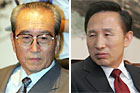
North Korea has cast aside its hard line policy and is busy making overtures to enemies and brothers alike. The latest move; the delegation which came to pay its respects at the memorial to former President Kim Dae Jung came with a message of peace from Kim Jong Il for President Lee Myung Bak, wherein Kim apparently expressed a desire to improve inter-Korean relations.
Prior to their arrival, some experts suggested that since the North Korean delegation’s visit was organized through the Kim Dae Jung Asia Peace Center, and the schedule was not reported to the South Korean administration in advance, they were private visitors, not a state delegation.
If so, it would have followed to presume that North Korea sent Secretary Kim Ki Nam, Director of the United Front Department Kim Yang Gun and the other four members of the delegation simply to arouse South Korean internal conflict by emphasizing the value of the June 15 Joint Declaration and October 4 Inter-Korean Agreement, which were signed by liberal former Presidents Kim Dae Jung and Roh Moo Hyun respectively, and not to sincerely pursue a fresh tack in inter-Korean relations.
However, the delegation went against that interpretation, instead working unexpectedly hard to get Kim Jong Il’s message through to President Lee.
Regarding the message from Kim Jong Il, the Blue House, the office of the President, did not reveal the details, instead announcing, “It was a message from Chairman Kim Jong Il about improving inter-Korean cooperation.”
Prior to the meeting with South Korea’s Minister of Unification on the 22nd, Kim Yang Gun expressed a positive mood, saying, “I am hoping to have a heart-to-heart talk [with the Minister of Unification] as the first talks with the South Korean authorities since the inauguration of this administration.”
Indeed the Chosun Central News Agency (KCNA), North Korea’s state news agency, announced that in the meeting between the North Koreans and President Lee, “ways to enhance North-South relations were discussed.”
Negotiations on the details of family reunions, resumption of Mt. Geumgang tours and removal of the December 1st measures, which were suggested by the North and agreed upon in meetings with Hyundai Group Chairwoman Hyun Jung Eun earlier this month, may shortly begin, while Kaesong Complex rent and wages negotiations will continue.
North Korea has also asked the U.S. for bilateral talks through several channels since the release of the two American journalists, although the U.S. has spurned the North’s proposals every time, saying that they will not have bilateral talks outside the Six-Party Talks format.
Meanwhile, delivery of Kim Jong Il’s message to President Lee was their attempt to break through the Lee administration’s hostility to the North. It is part of a peace offensive to weaken international cooperation on sanctions against North Korea and bring in hard currency in defiance of economic sanctions.
Professor of North Korean Studies at Korea University Yoo Ho Yul put forward this analysis, “North Korea has created the atmosphere for change by bringing about former U.S. President Bill Clinton and Hyun Jung Eun’s visits. Additionally, Secretary Kim Ki Nam’s visit to the Blue House was aimed at causing a policy shift in South Korea.”
A researcher at the Sejong Institute, Lee Sang Hyun said, “North Korea has always tried to improve inter-Korean relations at times when U.S.-North Korea relations are deteriorating as a way of isolating South Korea while communicating with the U.S. It has always been North Korea’s conventional diplomatic policy. However, these days the North is trying to placate the U.S. and South Korea at the same time. This is because North Korea recognizes the necessity of a policy shift in order to get through international and domestic difficulties.”









