
North Korea’s largest hydroelectric project stretches 90 kilometers along the Chongchon River across three provinces, but the Huichon power plant carries a dark legacy. Kim Jong Il died from heart complications aboard his private train in December 2011 while inspecting the massive facility he had ordered built to solve Pyongyang’s power shortages — earning it the grim moniker “the power plant that killed Kim Jong Il.”
The complex in Jagang province began construction in March 2009 as one of Kim Jong Il’s key projects. North Korea promoted it as a monumental creation that the leader visited eight times before his fatal final trip.
Recent satellite imagery shows the current state of 12 power plants built over six years and eight months during the first and second phases of Huichon power plant construction.
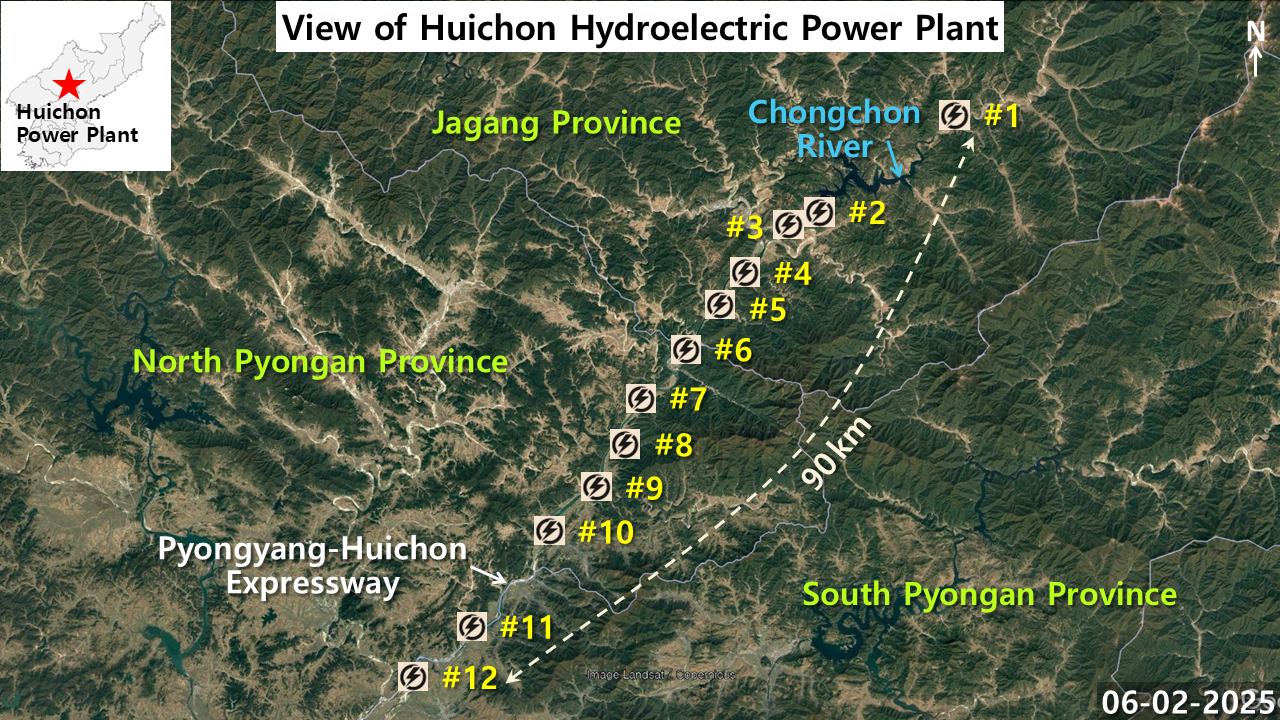
The Huichon power plant consists of 12 facilities numbered 1 through 12, built along a 90-kilometer section of the Chongchon River across three provinces. Plants 1-5 are located in Jagang Province, 6-10 in North Pyongan Province, and 11-12 in South Pyongan province. Construction began in 2009 amid controversy over shoddy workmanship during the building process. Kim Jong Il became enraged and went to provide on-site guidance, where he died suddenly aboard his train. After Kim Jong Il’s death prevented him from seeing the completion of the first phase, both phases 1 and 2 were finally completed in November 2015, about four years later, with the finishing of the 12th stepped power plant on the Chongchon River.
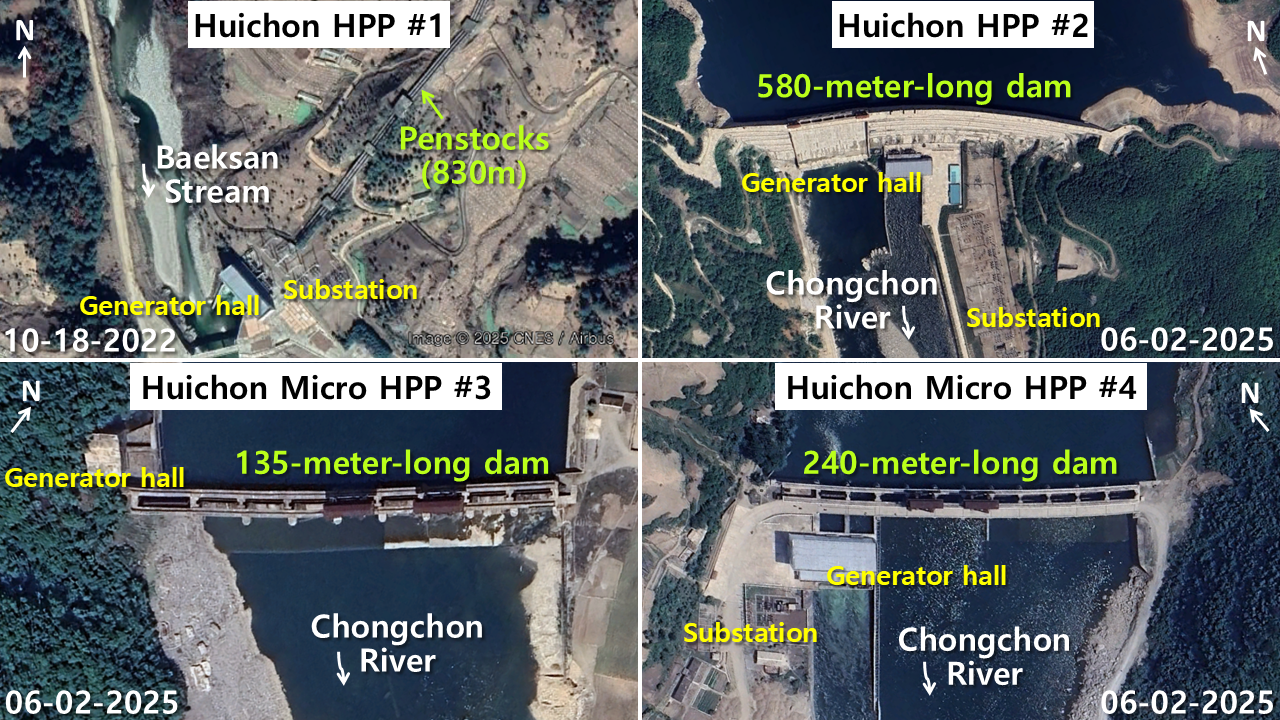
Huichon power plant No. 1 was built in Dongshin county, Jagang province, while plants 2, 3, 4 and 5 were constructed in Huichon, Jagang province. Plant No. 1 is a typical watershed diversion facility that blocks the upstream Jangja River, a tributary of the Yalu River, with the Yongrim Dam and generates electricity by dropping water through a 30-kilometer underground tunnel through the Nangnim Mountains to the upper Chongchon River with high head. Plant No. 2 is a conventional hydroelectric facility that combines water from Plant No. 1 with Chongchon River water to utilize large water volumes. The first phase construction of plants 1 and 2 was completed on April 5, 2012, after Kim Jong Il’s death. The completion of the massive first phase construction in just three years, which was expected to take more than 10 years, created the “Huichon spirit” slogan of speed warfare in North Korea, accomplished “in one breath.”
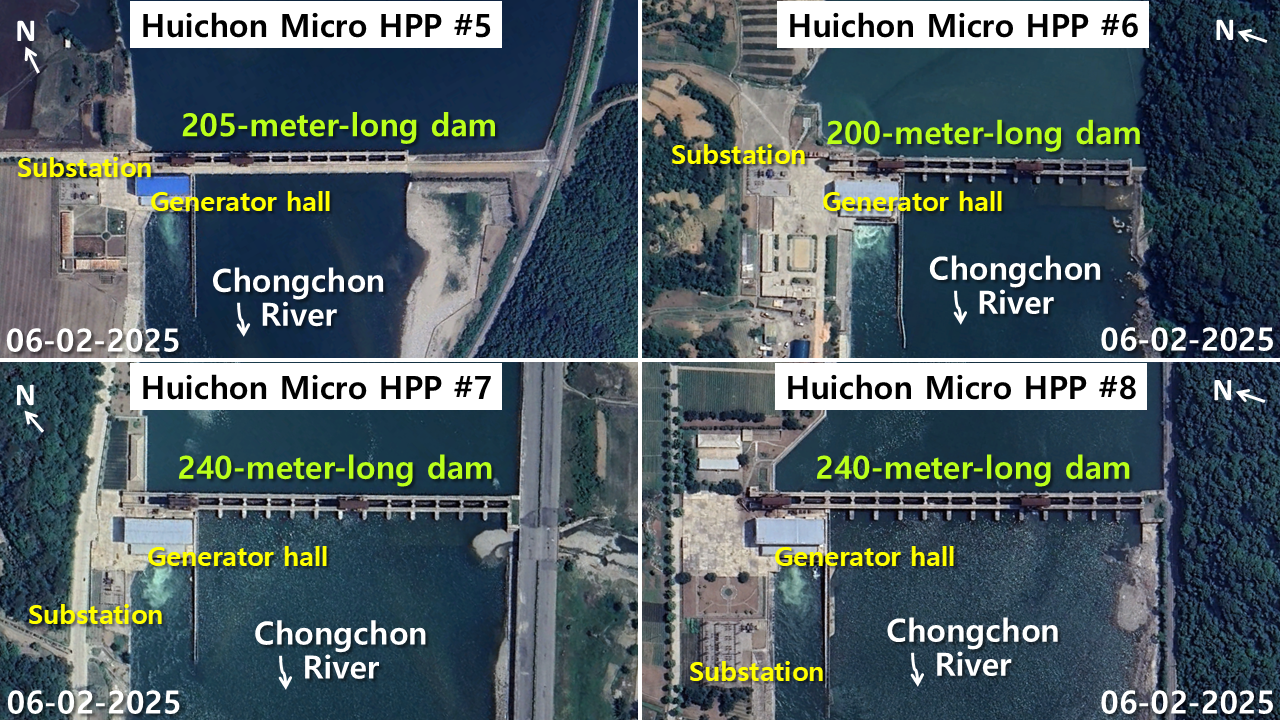
The second phase of Huichon power plant construction began on Jan. 30, 2013. From this point, 10 small and medium-sized power plants were built in stepped fashion along a 77-kilometer section of the Chongchon River spanning Jagang, North Pyongan and South Pyongan provinces.
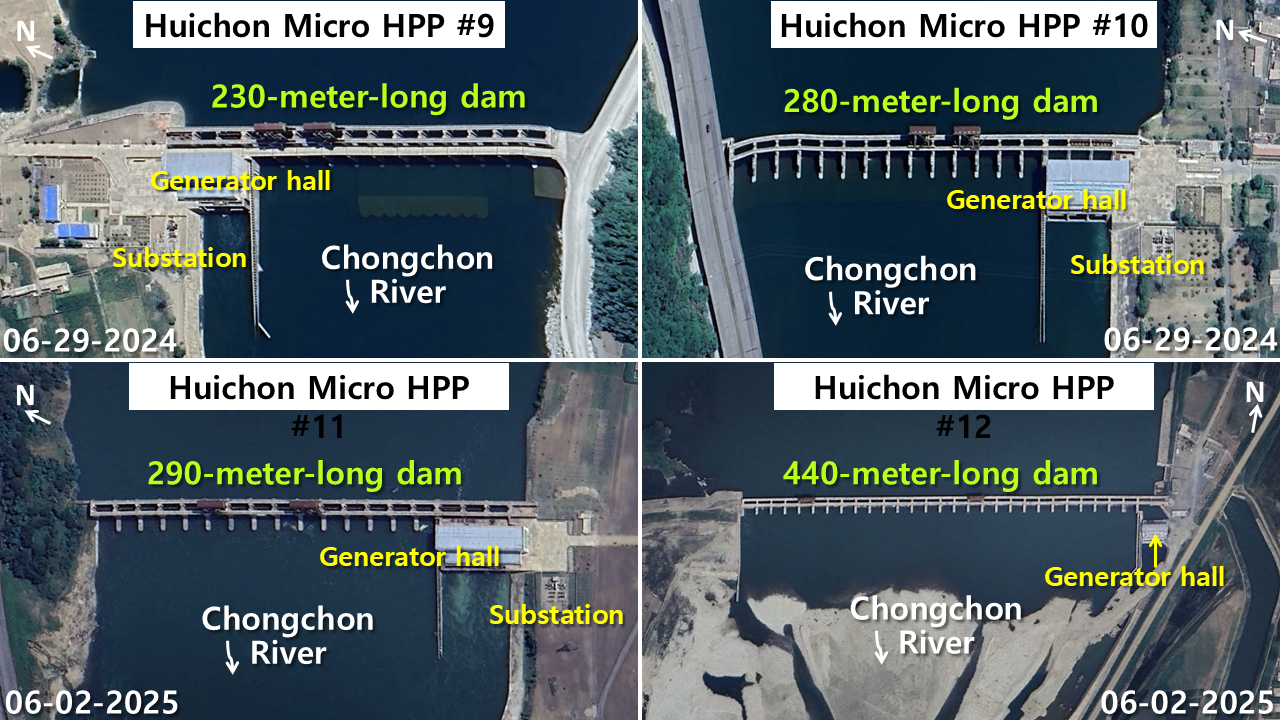
Four small and medium-sized stepped power plants numbered 6-10 were built in North Pyongan province, while the small and medium-sized plants 11 and 12 were constructed in South Pyongan province. Plant No. 12 was completed on Nov. 17, 2015, finishing the entire second phase of Huichon power plant construction in less than three years.
Kim Jong Il died on Dec. 7, 2011. North Korea announced that Kim Jong Il died from myocardial infarction and cardiogenic shock complications aboard his private train Taeyangho due to accumulated mental and physical exhaustion while continuing his forced march of on-site guidance at Huichon power plant construction with only “brief naps and rice balls.” However, South Korea’s National Intelligence Service told the parliamentary intelligence committee at the time that Kim Jong Il’s private train “remained stopped at Pyongyang’s Yongsong Station,” raising questions that differed from North Korea’s official announcement that Kim Jong Il died while traveling by train. This remains another mystery surrounding Kim Jong Il’s death.