

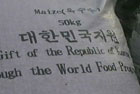
The South Korean administration notified North Korean authorities about its intent to provide 50,000 tons of corn. However, North Korea refused the suggestion on the 30th June. The South Korean administration tried to send a telephone notification from the office of the President of the Korean Red Cross to the North Korean President of the North’s Red Cross in order to ascertain the North’s position, but the North Korean authorities refused to receive it.
Thus, it is obvious that North Korea will not accept any food aid from the South Korean administration. Nonetheless, the Ministry of Unification position is that “We will provide 50,000 tons of corn as soon as North Korea informs us of the place, time, delivery method, and other executive details.” It is looking forward to a response.
It is known that the food output of North Korea was drastically reduced by the floods of last year. Rumors that the North Korean people’s food situation has seriously deteriorated were also circulating. Especially, news of those who had died of hunger or were suffering from malnutrition in kindergartens, asylums for the aged, and munitions factories which rely on the national food distribution system, was filtering through.
According to the above circumstances, it seems to be true that North Korea faces a food crisis even though it is likely not as serious as the situation in the mid-1990s. Therefore, why did North Korean authorities refuse the South Korean offer?
First of all, the North Korean authorities’ evaluation is that its food situation is not so desperate that it could threaten the regime’s survival. Additionally, the situation is getting better because the harvesting of potatoes just started, and 500,000 tons of food from the U.S. has arrived. There is also another significant reason, that the responsibility of the authorities has been eased because 60% or 70% of the population are already living by doing business in the jangmadang.
In this situation, refusing the offer of 50,000 tons of corn seems like a political demonstration against the South Korean administration, just like the conventional North Korean tactic of “communicating with the U.S. while isolating South Korea.” It means political pressure on the South Korea administration, saying “Don’t mention reform and opening, or other human rights issues, but bow to us and cooperate with what we want.”
However, what the South’s administration keeps in mind is that the leadership of the inter-Korean relationship is always in the South’s hands. The gulf between the South and North in the economy, military and other fields is incomparably wide. North Korea is facing a dead end which links only to the way of reform and opening. The Kim Jong Il regime is losing the support of the people. Therefore, there is no reason for the Southern administration to be impatient.
Instead, the South needs to use a strategy of keeping the alliance with the U.S. firm and strengthening economic power while keeping a calm attitude against the political pressure from the Kim regime and its military threats. If the Lee Myung Bak administration makes a wrong move, it cannot help but be dragged along by the Kim Jong Il regime’s intent for the rest of its 5 year term of office.
The South’s administration should keep cool and watch what the North does, in this case the refusal of 50,000 tons of Southern corn.








