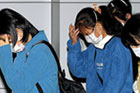
The National Human Rights Commission of Korea (NHRCK) has released a report outlining the human rights abuses suffered by North Korean women in third countries like China due to factors such as their persisting illegal status.
The report, “Research into Human Rights Violence in the Process of Defection and Settlement of Defector Women,” was released today.
This research is the first of its kind focusing solely on women. It classifies cases by place (North Korea, various third countries and South Korea) and lists human rights abuses in a systematic way, taking note of the social structures which cause the recurrent violence and abuse.
The report explains, “In the 1990s, following the famine and with an inadequate maternal policy, North Korean women faced a serious economic situation which led them to economic activity. As a result, they were exposed to exploitation and violence.”
It continues, “After defecting from North Korea and while staying in China, they had to be on the lookout for others, such as brokers or Korean-Chinese acquaintances, in order to protect themselves from the Chinese police. Additionally, they had to endure long, hard work at low pay due to their position as illegal aliens. There are many cases in which women hid their identifications and self-respect following experiences of disdain and discrimination.”
Those who came through third party countries like Thailand, Cambodia, and Mongolia pointed to their experiences in refugee camps as the most terrible, experiences which they did not even want to remember. In the camps they were violently harassed without reason and blocked from using the rest room. There was one case where a woman in a camp was made to stand on one foot for three days.
Psychological wounds such as a sense of guilt for leaving children in North Korea, sexual violence, human trafficking experiences, forced marriage and such were also so serious that symptoms emerged in the form of physical diseases after entering South Korea, the report also notes.
Even in daily life in South Korea, the report continues, “Since they do not know the South Korean situation or system well, many suffer unfair working conditions and deception.”
The report emphasizes, “Supporting government programs as well as local society is necessary so that these women can recover their self-respect and live as subjects in this society.”
This research was conducted via face-to-face interview with 26 women living in South Korea between April and December, 2009, and by questionnaire with 248 more staying at Hanawon, South Korea’s rehabilitation and education center for defectors, during August, 2009.