

[imText1]2008 is the 62nd anniversary of foundation of Korean Residents Union in Japan (Mindan, a pro-South Korean organization), which was established just a year after liberation from Japan.
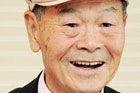
Chung Dong Hwa, 84, now an advisor to Mindan, a man who has led the organization since its inception, recently visited South Korea and had an interview with the Daily NK.
– What made you participate in Mindan?
In October 1946, Mindan was founded in Japan. The first Chairman was an anarchist who was famous for his struggle against Japanese imperialism, Park Ryol. Mindan’s power and financial capacity, however, was far below than that of Jochongryon (General Association of North Korean Residents in Japan).
I opposed communism because Jochongryon advocated the idea that only laborers and farmers were Korean nationals while landowners and capitalists were reactionaries, thus dividing the nation. We had to unite, but class-struggle theory split us up into landowners, proletariat and intelligentsia.
– You mentioned that the Zainichi (Korean Japanese) Student Volunteer Army participated in the Inchon Landing operation at the beginning of the Korean War, in September 1950.
Only days after the Korean War started, Seoul fell to communist forces and the South Korean army retreated to the Pusan perimeter. I thought South Korea was on the verge of collapse.
Then, the news of UN Forces’ entry into the war reached us, and I organized a student movement of comrades in Japan. About 50 of us wrote a petition in blood to the U.S. occupation forces in Japan to let us fight in the Korean War as volunteers.
But the U.S. Army representatives did not allow it, so we protested in front of the Allied Headquarters, holding Korean flags, and asked for permission to fight. Then, General Douglas MacArthur saw us protesting and asked his adjutant why. When the aide explained the situation, General understood our strong will and allowed our participation in the war. This is the first time I’ve told the South Korean press how the Zainichi got entry into the Korean War.
We were commissioned as a unit inside the US Forces and arrived in Inchon during the landing operation. A total of 600 Zainichi Koreans fought in the war as volunteers.
– When did the power of Jochongryon start to wane?
As a consequence of the Zainichi Koreans’ Emigration to North Korea Project, a project that started in 1959 and culminated in the 1960s. North Korean propaganda described their country as heaven on earth. About a hundred thousand Zainichi Koreans moved to North Korea as a result of it.
North Korea propaganda promised that emigration to North Korea would free us from Japanese discrimination. Also, the Japanese government regarded Zainichi Koreans as troublesome, and therefore helped the project.
Those who moved to North Korea realized, as soon as they reached the ports of Chongjin or Rajin, that they had been deceived. Soon, they started to send letters to their relatives in Japan, asking for clothes and money. Jochongryon tried to hide this fact, but it became common knowledge in Japanese society, eventually. We attacked Jochongryon on the project, and those who had been neutral started to support Mindan.
By the 80s and 90s, Mindan membership outweighed Jochongryon by 7 to 3.
– Jochongryon acquired its wealth through the Pachinko industry. How about Mindan?
“Mindan’s main source of income is also pachinko. Pachinko provided us with the only way to recover from the economic collapse of Japan after World War II. Almost half of the industry was dominated by Zainichi Koreans. Many of them were Mindan members.
However, Jochongryon sent all the profit back to North Korea as tax. Financial intermediaries and merchants with Jochongryon membership had to pay the tax. However, Mindan did not collect a membership fee forcefully.
Now, the pachinko industry is declining in Japan, and the North Korean economy collapsed after Kim Il-Sung’s death. Inside Jochongryon there was liberalization; many businessmen turned to Mindan. Jochongryon’s power has been much weakened.
– What does Mindan expect from the South Korean government?
“Now, first generation Zainichi Koreans are only five percent of the total. I am 84 years old, and many of my peers have passed away. The mainstream of Zainichi is second or third generation. While the first generation knows Korea, they are born and educated in Japan. Regardless of Mindan or Jochongryon membership, they want success in Japanese society.
Also, second and third generations have little opportunity to learn the Korean language and history. As a result, about five thousand each year apply for Japanese citizenship.
We are asking the Japanese government to grant us voting rights in local elections. I hope the South Korean government can help us on this.









