
◆ A tense situation between the U.S. and North Korea is inevitable for now.
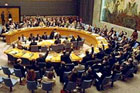
Following North Korea’s consecutive threats, frozen inter-Korean relations are likely to get worse. On the 21st, North Korea devised a reason for re-writing contracts on the Kaesong Complex through the preliminary liaison meeting, which was the U.N. Security Council President’s Statement.
North Korea stated in a notice to the South, “This was because the South Korean administration lead-out in supporting international sanctions against us while picking a quarrel about the long-range rocket launch.” Rodong Shinmun emphasized also on the same day that the adoption of the U.N. Security Council Presidents’ Statement was backed by the South’s vicious maneuvers.
North Korea’s unexpected request for dialogue with the South, lead some to believe a turning point had come in inter-Korean relations. But the dialogue amounted to little more than an opportunity for the North to express its discontent with the South’s countermoves on the North’s rocket launch.
Therefore, the current freeze in inter-Korean relations will not thaw as long as the Lee Myung Bak administration does not change its policy on North Korea to something along the lines of the former Sunshine Policy. And yet the Lee administration, which values denuclearization through international cooperation, is not expected to try to shift its policy in the midst of a Six Party Talks stalemate.
A researcher at the National Policy Institute explained, “North Korea’s recent attitude shows, in a roundabout way, that North Korea itself is anxious about North/South tensions.”
Senior researcher at the Korea Institute for National Unification, Park Young Ho said, “If negotiations between the U.S. and North Korea and the Six Party Talks start again, this will help generate momentum for the inter-Korean dialogue. North’s threats have arisen from the North’s awareness of crisis, in which it feels that the nuclear related issues are not solved as it wanted. Therefore, we do not need to fret about this situation.”
◆ China and Russia can hardly mediate the issue.
China and Russia were opposed to the U.N. Security Council’s sanctions over North Korea, but they were for the President’s Statement. Therefore, North Korea expressed an indisposition towards the UNSC President’s Statement saying that, “It is a declaration of war [against us] from U.S. and its followers.”
Russian Foreign Minister Sergei Lavrov was not able to meet Kim Jong Il during his visit to Pyongyang from the 23rd and the 24th, unlike before, although he brought an autograph letter of the Russian President Dmitry Medvedev.
When North Korean Foreign Minister Pak Ui Chun visited Beijing on the 25th, a ministerial meeting between Chinese Foreign Minister Yang Jiechi and Minister Pak was expected but was not held.
Immediately after releasing the UNSC President’s Statement, China and Russia tried to soothe an angry North Korea, but the North’s angst is not likely to turn back in a short term.