

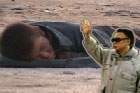
1. Consecutive Public Executions
[imText1]A manager of Chollima Steel Mill Complex located in the Gangseo-district of Nampo, South Pyoungan Province was shot for smuggling steel in late February, and a discharged soldier was shot at Bumpo-ri in Samsoo, Yangkang Province for stealing five cows that belonged to the neighborhood collective farm on March 28.
In Bocheon in Yangkang Province on April 8th, two brothers-in-law were executed by a firing squad for the robbery and murder of a couple of peddlers. Park Geun Choon (48), an official in charge of selling narcotics for the 459 military unit, also called the “Chongjin Liaison Office,” was secretly executed in early June for the crime of copying and selling adult movies brought in from abroad.
A public execution of 14 people suspected of corruption uncovered during the inspection process was conducted in order to finish up the inspections around Sinuiju led by Jang Sung Taek, Director of the Ministry of Administration of the Party. On September 29, a person involved in a murder case and three in drug dealing were shot.
Five women were executed in Hoiryeong’s Public Stadium, North Hamkyung Province on the 7th of September for the charge of human trafficking (assisting the border-crossing of defectors).
After the scene of a public execution held on March 1st and 2nd, 2005 in Hoiryeong was revealed by a Japanese broadcasting company, N-TV, in April of the same year, North Korea had restrained itself from undertaking public executions.
2. Starved People Found in Munitions Factories
[imText2]With increasing difficulties due to the food crisis and flood damage in Southern regions last year, persons who had starved to death were found in May among the workers of munitions factories. Workers of the munitions factories are supposed to entirely rely on distributions from the factory, but after distribution ceased, they could not have had any way to live on.
Since April, on average two or three munitions factory workers have died daily. The victims are all older than 55-year old.
The source released that, “In my people’s unit, there would rarely be anybody who ate thin starch porridge last year, but this year the number of those who eat it as a daily meal is increasing.”
From April to June, the rice price in the jangmadan exceeded 4,000 North Korean won per kilogram in Chongjin, North Hamkyung Province. Since July, it has been down to around 2,000, the average price, so there was no mass-starvation, as predicted by a South Korean NGO.
3. Jang Sung Taek, Return to the Party
Kim Jong Il’s brother-in-law, Jang Sung Taek (62 years old) returned to the position of First Vice Director of the Guidance Department of the Party, the core power apparatus ruling the party and the military, in September.
There was no public announcement on his position by the North Korean authorities, but sources in North Korea reported with one voice that Jang Sung Taek was ruling the general work and personnel management of the Party, the military and the security organizations.
Since March, he led the inspections in Shinuiju and, at the same time, over the military units. He has been concentrated on as the most influential figure after Kim Jong Il went to his sickbed.
He lost his position as First Vice Director of the Guidance Department in 2004 because he carried on an excessively luxurious life using his power and built a ritzy villa like Kim Jong Il’s special villas. He came back to the Party as the First Vice Director of the Workers’ Organization and Capital Construction Minister two years later.
4. Don’t Ask about the General’s Health
As the rumors about Kim Jong Il’s illness were circulating in North Korean society, people were told not to even mention anything regarding the Dear Leader’s health because all rumors about his health are lies and only those who are disloyal talk about such things.
In mid-October, in lectures in the People’s Units and factories, an instruction was issued by the authorities saying that those who talked about the rumors and made stories of the health issue should be seriously punished.
It was also confirmed that the “General’s Instructions,” wherein Kim Jong Il instructs the people directly, were reduced.
After late-August, the General’s Instructions were not handed down to the people through any level of meetings, so suspicious rumors of Kim Jong Il’s heath were circulated.
At the same time, lectures to stress the security of national secrets to the people increased after the Kim Jong Il rumors unfolded.
5. Trouble with Kotjebi and Jebitte
[imText3]During this summer, North Korean authorities were concerned over increasing gang activity involving “kotjebi” and “jebitte,” teenager gangsters, around railway stations and in the jangmadang.
In Rajin-Sunbong, Chongjin, Hamheung, Nampo and other big cities in North Korea, gang activities have been increasing and authorities like the Anti-Socialism group, patrol units of the People’s Safety Agency, the National Security Agency and the Youth League were all on alert.
“Jebitte” is a new term describing a youth gang, different from largely independent child-beggars (kotjebi). Informants explained that the term was first used in Rajin-Sonbong (Rason), North Korea’s special economic zone in the north-east.
A “jebitte” member is usually neatly dressed and normal, not criminal-like, but when they are in group, they turn into hooligans. They move around markets, stations or other populated areas and commit organized crimes such as robbery, smuggling, rape and murder.
6. Strengthening the Border Regulations Preparing for the Beijing Olympics
[imText4]The North Korean authorities have strengthened regulations over the people by setting up monitoring cameras along the border a head of the Beijing Olympics.
Cameras made in China were on the border side of the Tumen River and nailed planks were set up on the border in Hoiryeong.
Due to strengthening the crackdown on the border during the Olympics, the costs in bribes to border guards to cross the river to China have been skyrocketing to 5,000 Yuan (approximately USD600).
In Musan, North Hamkyung Province, with 5,000 Yuan one could cross the border under protection of a North Korean border guard and then be taken to Helong in Yanbian Korean Autonomous Prefecture via car by a Chinese guard.
7. China Rounded Up Defectors in Preparation for the Olympics
With the Beijing Olympics ahead, the Chinese police authorities targeted defectors in the Yanbian Korean Autonomous Prefecture.
The police in Jilin inspected foreigners’ identification in the Yanbian Prefecture since April in advance of the approaching Beijing Olympics torch relay, which arrived in Yanji on the 16th of this month. In this process, at least 100 defectors were hauled in by the Chinese police, and more than 20 were arrested in Wangqing, Yanbian Prefecture on July 10th.
According to an NGO source assisting defectors in the Yanbian Prefecture, the number of forced repatriations of North Korean travelers, who came to China with passports to earn money under the pretext of visiting relatives, increased due to time expired on the passports.
The North Korean authorities had been issuing visas for up to two months in order for North Koreans who were visiting relatives to remain in China. China’s custom, until now, was to ordinarily issue three-month visitors’ visas and to extend the visas for up to one year if the traveler could secure a place of residence and employment.
8. Drug Smugglers in Collusion with Cadres
[imText5]In Chongjin, North Hamkyung Province, officials who had received a commission from Chinese narcotic gangsters and colluded to produce and sell narcotics on hospital grounds were arrested.
Mr. Goh, manager of the Revolutionary Records and Historical Preservation Office in Chongjin, the director, dispensary chief, doctors at the Chongjin Hospital and primary party secretaries were all involved in the case.
Prior to this case, in February Kim Tae Kil, a head of the preliminary examination office of the National Security Agency in Hoiryeong went on trial on suspicion of selling drug to China.
9. New Recruit Weighing Less than 43kg Can Serve in the Army
[imText6]In this spring, North Korean military authorities accepted recruits under the height of 148 centimeters and 43 kilograms in weight.
The health condition of recruits was not so sound, so the authorities urged girl students to volunteer for the army. In March, an internal instruction that women who had not served the army could not be appointed as high officials was notified.
10. Tramline Cars Collide, 400 Students Injured
The streetcars, which were carrying students to training for the Arirang performance, overturned and around 400 students were injured on July 20.
An electric train from the Cheongnyun (Youth) Street on the Nakrang Bridge was stopped by a sudden interruption to the electric current, and trains that were following ran into it and overturned. It was all because of a lack of electricity
The People’s Safety Agency arrested the innocent drivers for creating trouble for national business (the Arirang Performance).
Around three hundred tramway cars operating in Pyongyang were imported secondhand from the Czech Republic in 1990 and reportedly suffer countless troubles everyday.







