

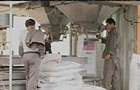
Two days ago, North Korea decided to refuse additional U.S. food aid and then asked five international humanitarian NGOs to leave the country by the end of this month.
The U.S. Department of State revealed on Tuesday in a press briefing that North Korea “does not wish to receive additional U.S. food assistance at this time.” According to the Department, in 2008 and 2009 the U.S. delivered 169,000 metric tons of food to the impoverished Communist state.
There are diverse opinions on the why of this situation. After all, the North is already in a negative international spotlight. One ostensible reason for it is likely to be antipathy against U.S. requests for transparency of food aid distribution.
North Korea and the U.S. have yet to resolve their differences on increasing in the numbers of staff who can speak Korean and improving the monitoring system for food distribution, so humanitarian food aid distributed through the WFP has been suspended since September of last year.
The North Korean authorities have accepted only three Korean-speaking monitors out of 59 WFP monitors and six out of 16 monitors from the other five aid groups (who have of course now been asked to leave in any case). The U.S. has called on North Korea to increase the quantity of monitors who can speak Korean to 12 for the WFP but the North has thus far ignored it, and conflicts between both sides have arisen.
With this latest move, North Korea is trying to seize the initiative away from international society in any possible food aid negotiations.
Korea Institute for National Unification researcher Park Young Ho analyzed the situation in an interview with Daily NK, “North Korea intends to stand the situation because the U.S.’ emphasis on the transparency of food distribution is a great internal burden to them, and for the time being there is no mass starvation there.”
A researcher at the Institute for National Security Strategy, Lee Gi Dong agrees, “It is a direct sign of disapproval of the U.S.’ requests for an increased number of monitors. The improved food situation over the last year may also have affected the North.”
The Ministry of Unification estimates the North’s food production in 2008 amounted to 4.31 million metric tons, so a shortage of around 1.17 metric tons can be anticipated. This estimate is a fairly standard level, with the exception of 2007 when flood damage was more serious. Experts on North Korea believe that when China-North Korea trade and aid along with aid from other countries is factored in North Korea will not face serious food insecurity this year.
Additionally, the South Korean government is seen by the North as one of the reliable elements behind such a strong move because the Southern administration could provide several tens of thousand tons of food to the North just so long as the North enters an inter-Korean dialogue.
Therefore, ahead of any possible dialogue or negotiations with the Obama administration North Korea intends to take the high ground.
Preparations for the launch of an alleged satellite only a short while after the new U.S. administration’s start, cutting off the military communication line on the pretext of the U.S.-South Korean joint military drill, Key resolve, and the refusal to accept Special Representative for North Korea Policy Ambassador Stephen Bosworth’s visit to North Korea were presumably all generated from the same intent.
Park Young Ho asserts therefore that, “It seems like a message, ‘Don’t treat us negligently,” to the U.S. even during the Key Resolve drill.”
According to Lee Gi Dong, “The Obama administration’s talk about UN Security Council sanctions over the North’s launch of ‘Taepodong-2’ and the North’s human rights issues made Pyongyang feel uncomfortable, so it may have been the reason for refusing U.S. food aid.”









