

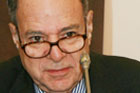
[imText1]Don Oberdorfer, of the Paul H. Nitze School of Advanced International Studies at Johns Hopkins University, expressed that “This is an important moment for the U.S. – Korea relationship.”
He said that “The relationship between the U.S. and South Korea will change with the inauguration of the Lee Myung Bak administration and the U.S. Presidential Election at the end of this year.” Noting that with Senator John McCain’s proposed hard-line proposals regarding North Korea, “it’s clear that U.S. policy would turn sharply towards the right.”
Oberdorfer predicted that “The next round of the FTA could be problematic,” as “Free Trade is not currently popular in the U.S.” He suggested that “political leaders are concerned that the FTA may not be the best solution for (the US.)” He also expressed concerns that “FTA falls part at this stage,” it would be widely seen as the U.S.’s “disengagement with Asia – which is the last thing we want at this time.” Leading Democratic Presidential Candidates Hillary Clinton and Barack Obama are also said to be “skeptical towards the FTA.” He also suggests that they are “not so willing to deal extensively with North Korea.”
Regarding the Kaesong Industrial Complex which he had just returned from visiting, Oberdorfer said that the “Kaesong Complex is a sign of change for North Korea.” He expressed his impression that what he “saw yesterday, speaks louder than any words could utter.” In a stark contrast to the Kaesong he had seen when he first “crossed Imjin-gang in (his) jeep in the 1950’s.” he said that he saw “a thriving, busy modern place, which made (him) feel (he) was in a different part of Korea,” continuing that he had to pinch himself “to realize (he) was in North Korea.”
Former Japanese Ambassador to South Korea, Terada Terusuke explained that “Japanese media expect President-elect Lee Myung Bak to use pragmatic diplomacy, something like we can see in business management,” then suggested that upon inauguration the new administration will move away from “the appeasement policy towards North Korea of the Roh Moo Hyun” era. However, in regards to the Vision 3000 policy for “Denuclearization and Openness,” he expressed concern that North Korea has a “long to go to reach a per capita income of 3000 dollars.”
Terada added that “The Fukuda administration in Japan in focused on an Asia-friendly policy and the intention to improve the Japan-Korea relationship is high.” While President Roh had once “declared diplomatic war on Japan,” Terada suggests that the proposed policies of the Lee Myung Bak administration, including not being interested in asking for further reparations from Japan, will also lead to a “fruitful, meaningful relationship” relationship between Korea and Japan.
Ren Xiao, a professor of Fudan University, said that “China does not know the President-elect, Lee Myung Bak well compared to Kim Dae Jung and Roh Moo Hyun. However, China wants to continue to build a stable and sustainable relationship with South Korea.” Regarding China-North Korea relations, Professor Ren said that “Since the North Korean nuclear crisis, China has pursued a two track policy” in which China criticized the nuclear test while being opposed to “sanctions by the UN Security Council.” Additionally he said that “China and North Korea do not want to damage their relationship.”
He said that “China is carefully tuning its North Korea policy with prudence,” and will “wait and see (how things develop) with significant patience.”









