

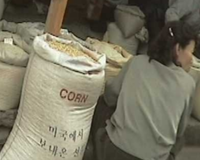
Reports have come out of North Korea that
the authorities have issued a new rule forbidding any one seller from having
more than 500 kg of rice. Anyone found to be violating this rule can expect
their excess supply to be confiscated by the authorities, Daily NK has learned.
On the 9th, our Daily NK reporter spoke
with a source from Yanggang Province, who informed us that this law targeting merchants
is being enforced by the “Food Supply Task Force.”
Things are no different in South Hamgyong
Province, according to a Daily NK source there. In the Leebok District of
Hamhung City the task forces “will go after trucks that are transporting
rice stores. When traffic gets backed up because of snow, members of this task
force will jump into the cars and inspect them, snatching away the extra
supplies of rice of anyone caught with over 500 kilos,” she said.
Because most purveyors of rice purchase
their product in quantities well over this amount, most of already fallen
victim to the task force’s ruthless inspections. “Up until now, the markets
have been largely free of crackdowns and regulations, so everybody is wondering
what is behind this sudden change in policy,” the Yanggang Province source
reported.
“Some are suspicious that the authorities
are trying to build up their own rice stores in advance of the 7th Party Congress slated for next year, as they will have to plan how much they can distribute
to the citizenry,” he said.
Because of the road seizures of rice by the
task force, and increased difficulty in transporting rice in heavy and unwieldy
vehicles on icy roads, rice prices on the markets are skyrocketing. Prior to
the crackdown, rice prices were 4700 KPW [0.54 USD] in November, but they have recently
risen by as much as 700-800 KPW per kilogram to reach a price of 5500 KPW [0.64 USD].
For now, all that excess rice is piling up across a spate of state-owned warehouses and is particularly distressing for local residents to witness. “As the nation readies itself for next year’s Party meeting, the atmosphere is tense, and market sellers feel they
cannot voice their complaints. Instead, they must stand by and watch while
their fruitless anger smolders in their hearts and rice prices rise all over
the country, from Pyongsong to Hyesan,” he concluded.









