

[imText1]During the 10-year era of the Kim Dae Jung and Roh Moo Hyun administrations, when “Sunshine” was the main current of North Korean policy, critics claimed that the “Sejong Institute,” a nongovernmental organization studying national security policy, unification and foreign affairs, was even more pro-North Korea, or ultra-leftist.
Despite being a research organization, researchers of the time almost unanimously supported the “Sunshine Policy.” However, there was one researcher who did not bend his beliefs and ceaselessly spoke “bitter words” against the government’s North Korea policy.
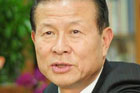
That researcher, who had been subjected to 10-years of government disapproval, was nominated as president of the institute on December 30th of last year. He is Song Dae Sung.
President Song wants to see ideas such as “self-reflection” and “renovation.” He has noted wryly that, “Some say that they do not know what the Institute has been doing for the last 10 years. Some even say that they do not know if it is a research institute for South Korea or for North Korea.”
He also believes, “Diverse values exist, such as progressives-conservatives, pro- or anti-U.S. camps, and pro- and anti-North Korea camps,” however, “among these, values that harm South Korea cannot be given credence. Our institute cannot support a value system that defames the South.”
In his view, “Neglect of the North Korean human rights issue is the core missing from North-South relations. We must not base our research on whether North Korea approves or disapproves of it.”
Song began at the Sejong Institute as Policy Research Chief in 1996, after having been Chief of Staff of the Korean Air Force headquarters and a professor at the Air Force Academy. After 2001, he focused on security and inter-Korean relations as a researcher in the Security Research Department.
Daily NK met the new elected president of the Sejong Institute, Song Dae Song on the 9th and heard his predictions for North Korea’s policies, relations with South Korea and the U.S.’ new administration.
– How do you evaluate North Korea’s New Year’s Statement?
There is nothing new in this. The goal of “befriending the U.S. while alienating the South” obviously benefits the former while constraining the latter. North Korea, following the Obama administration’s launch, is trying to destroy the Lee Myung Bak administration policy on North Korea. Furthermore, it will go to any lengths to assume the position of being a nuclear-armed state.
– There has been significant interest surrounding North Korea’s opening, reform, and succession issues. What is your forecast?
In the present situation, it will be difficult for the North to immediately open and reform. Kim Jong Il considers opening and reform as the means to guarantee his collapse. Actually, for the “self-revitalization” claimed by the North, opening and reform is needed, but it is difficult to even take up the position of accepting new ideas, at least before Kim’s death. This is because even mentioning “opening and reform” can be understood to mean “overturning the regime.”
It will also be difficult to specify the succession before his death or permanent incapacitation. Kim Jong Il not only opposes others discussing the succession plan besides him, but views it as a challenge to the regime, so it will be hard to form the plan in detail.
– What is the North Korea policy of the Obama administration?
The Obama administration will first attempt a direct dialogue with the North. It will also attempt to normalize relations while exerting an influence on the entire Korean peninsula. However, U.S.’ policy towards North Korea will differ according to prioritization; normalization of relations with the North or North Korea’s nuclear disarmament.
If the U.S. first tries to resolve the nuclear issue, significant pain is anticipated, because North Korea wants to be acknowledged as a nuclear state. Accordingly, it is possible that North Korea will initially suggest bringing up normalizing relations. The Obama administration can also clearly define the position of nuclear abandonment for North Korea while proposing economic compensation, as the U.S. did with Libya, if the Kim Jong Il regime can no longer sustain itself while insisting on an aggressive stance.
The need for providing economic compensation to the North is recognized by the Democratic Party to a certain extent. However, the North Korean human rights issue poses a stumbling block. The Democratic Party cannot compromise on the human rights issue. According to such variables, so the Obama administration’s policy and U.S.-North Korea relations will be delineated.
– What do you think will happen to the Six Party Talks?
Due to the lack of a progress when the Bush administration pursued a final round dialogue, the Obama administration does not have confidence that this dialogue will succeed. It will not deny the Six Party Talks to supplement the Bush administration’s results. Ultimately, though, the direction for the talks will be determined according to negotiations between the U.S. and North Korea.
– And the direction for the North Korean nuclear issue?
This depends on the convictions of the Obama administration. Whether or not it acknowledges North Korea as a nuclear-armed state will affect the future direction of this issue. If North Korea’s nuclear capability can be regulated within the confines of not harming the U.S., there will only be an addition made to the list of nuclear countries. However, in this case, Japan, Taiwan, and South Korea’s demands for nuclear weapons will probably grow more vociferous, causing a headache for the Obama administration.









