

The South Korean government and the South Korea National Red Cross (KNRC) both issued requests for negotiations on the 12th; the government in order to discuss ways to prevent flooding along the Imjin River, and the KNRC seeking progress on the issue of separated family reunions. This is an interesting development since it represents an active move by the current administration to improve inter-Korean relations.
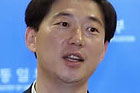
Cheon Hae Sung, a spokesperson for the Ministry of Unification, told reporters on Tuesday, “This morning our administration proposed holding talks between the two Koreas on how to prevent flooding along the Imjin River at the North-South Economic Cooperation Council Office on the 14th.” The KNRC also put forward the idea of further contact with the Chosun Red Cross Society to discuss humanitarian issues, including separated family reunions, at Mt. Geumgang on the 16th. Both requests were accepted in full.
Following the “Imjin River Incident,” during which six South Korean citizens were killed by a sudden release of water from the Hwangkang Dam inside North Korea on the 6th of last month, the South Korean administration demanded a detailed explanation of its causes and an adequate apology. In response, however, the North simply said that an “emergency release of water was necessary because rain and floodwater were threatening to breach the dam,” and that in similar future cases it would issue an advance warning.
South Korea’s administration, via a statement of the Ministry of Unification, initially continued to request an adequate explanation and an apology which would reflect the responsibility of the North Korean authorities, but as the North continued with unrelated conciliatory gestures the South Korean side eventually chose to take no further steps.
Indeed, even before the Imjin River tragedy, as international sanctions started to bite in late spring and early summer, North Korea had been trying to move inter-Korean relations onto a dialogue footing.
Kim Jong Il, under the agreement he reached with the Chairwoman of the Hyundai Group in August, promised to resume separated families’ reunions during the Chuseok (Korean Thanksgiving) holiday, which he did, and even proclaimed his desire to improve inter-Korean relations to President Lee Myung Bak by sending a special condolence delegation to former President Kim Dae Jung’s memorial service.
Now the South Korean government has taken the initiative in proposing negotiations on reunions and the future management of the Imjin River basin. These moves, aside from their practical merits, show Seoul’s desire to judge the degree of sincerity which underscores the North’s claimed wish to improve relations.
The government also seems to be stressing the necessity of getting a clear explanation of the causes of the flood, as well as a guarantee regarding any recurrence of events, in light of the fact that a number of South Korean citizens lost their lives in the tragedy.
The talks proposal was unexpected, but came soon after North Korea’s position was somewhat clarified during the recent visit by Chinese Premier Wen Jiabao to Pyongyang.
Premier Wen, at the South Korea-China-Japan trilateral summit which was held in Beijing on the 10th, passed on the North’s wish to improve relations with not only the U.S., but also Japan and South Korea. President Lee is said to have welcomed the news.
Lee Ki Dong, a senior researcher at the Institute for National Security Strategy, commented on the current inter-Korean dynamic, “The proposal by the administration took place immediately after South Korea-China-Japan summit discussions. This has been analyzed in terms of the South Korean government taking action after hearing the North’s position through the Chinese government, but in truth the South Korean government has already shown its will to resolve the Imjin River issue through several channels.”
However, he went on, “It is clear that the proposal by our government to have working-level talks is the testing board for understanding the North’s real will to improve inter-Korean relations.”
Lee also forecasted, “North Korea seems to have decided that acknowledging its responsibility for the Imjin River incident is sufficient to move inter-Korean relations forward. However, the South Korean administration is likely to take a more positive position if the North demonstrates a sincere attitude over the reunion for separated families and the Imjin River.”
North Korea, in the meeting between Kim Jong Il and Hyundai Chairwoman Hyun Jung Eun on August 16th, indirectly acknowledged its responsibility for the Imjin River flood, claiming, “Such an event will never happen again.”
So, although the North has not even acknowledged its responsibility for the shooting of Park Wang Ja at Mt. Geumgang in July of last year, the possibility exists that it will take a more conciliatory position regarding the Imjin River tragedy at this point.









