

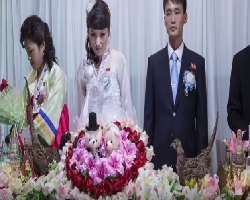
Unification Media Group (UMG): As fall wedding season winds down, we take a look at North Korea’s surging rental market, which offers a rare chance for ordinary citizens to access relatively affordable table setting luxuries, hanbok, and other items. Reporter Seol Song Ah joins us to discuss the rental market and how it has affected wedding culture in North Korea.
Seol Song Ah (Seol): Just as in the South, fall is a very popular time for weddings in North Korea, which normally continue through to next spring. The rental market for wedding-related goods is busy during this time, with merchants specializing in wedding attire, table settings, and other necessary items.
The rental market is providing access to previously out-of-reach goods to ordinary citizens, essentially narrowing the wealth gap with regards to wedding celebrations. Changes in the markets are bringing new concepts to consumers and changing the wedding culture for both rich and poor alike.
UMG: The wealth gap is often on display during wedding season, with the poor holding “candle light banquets” and the donju and elites holding “dollar banquets” – terms referring to the ability of the rich to pay for electricity for the ceremony, while the poor cannot. Do these concepts still apply today?
Seol: The donju and elite are famous for stocking tables with expensive foreign liquors and wines, tropical fruits, and other luxury items at their weddings. Ordinary citizens can never dream of such extravagance. Their idea of an accessible luxury would be alcohol from Pyongyang or Kaesong, and homemade tteok (rice cakes) and other snacks. The poorest of the poor will even try to acquire some of the empty bottles just to decorate their tables.
But these days, most ordinary citizens are able to rent previously inaccessible foreign items. Sources in Pyongyang told me that people are able to find all sorts of foreign foods and drinks, high-quality hanbok(called joseon ot in North Korea), and other necessities for weddings and other events, slowly reducing the wealth gap in the process. Even the poorest of the poor are saying that this emerging new market is very helpful.
UMG: People in South Korea also frequently rent wedding attire, but borrowing foreign-brand liquors is not a concept here. It’s quite surprising to hear about this development in North Korea. Can you explain how the recent changes compare to past practices?
Seol: The rental market first sprang up in the late 1990s. I remember taking advantage of the new opportunity for my son’s first birthday party. I rented all kinds of snacks and candy for the table setting, but it was my friend’s business so I did not have to pay. It was imperative that I returned them in exactly the condition they came in.
Demand has exploded since then, particularly as people realize that by renting rather than buying the lavish table settings that are used for show (and not for consumption), like tropical fruits and imported alcohol, they can divert the savings to providing people with a reasonable meal and cheaper spirits that they can actually consume. A source informed me that the price for goods in the leasing market is around 10% of the full price, which has made it attractive for customers who are now able to create a proper table setting for special events like weddings and birthday parties. What started as small operations and personal exchanges in the markets has over the past 20 years turned into professional rental services.
UMG: At just 10%, it’s easy to see how the system has taken off. Can you also tell us more about wedding culture in North Korea?
Seol: First of all, the table setting traditions are changing. The traditional family centerpieces that used to have multiple layers of lavish goods are being replaced by more standard floral centerpieces. Common items like tteok, pan-fried meat and veggies, pork, and even Pyongyang alcohol are now considered ‘old-fashioned.’ Liquor, wine, tropical fruits, and other foreign items are taking their place. A package including all of these items may cost $500 USD, but single-day use of the same package only costs $50 USD through the rental market. Customers are also able to add items for an additional fee.
Interestingly though, pheasants are not available for lease. North Koreans traditionally cooked two chickens to represent the bride and groom on either side of the table setting’s centerpiece, but have recently switched to the more expensive pheasant for consumption by distinguished guests like cadres. However, due to the fact that the pheasant can easily resemble a chicken once cooked, they keep the feathers on to keep the distinction clear.
A source informed me that chickens cost about 15,000 KPW in Pyongyang while pheasants cost double that. Pheasants have become the more popular item for weddings simply due to their higher price and subsequent function as a status symbol.
UMG: And how much are customers paying for hanbok rentals?
Seol: Depending on the fabric and design, a hanbok in Pyongyang may cost anywhere from $30 to $200 USD, although more expensive ones are available as well. The patterns and colors of the hanbok priced at around $100 and higher are quite beautiful. But poor families often purchased one for around $30 to give to the bride. It was such a pity that poor brides had to wear cheap hanbok while the donju and elite all flaunted much more expensive items.
The rental market is changing this. I spoke with a source in North Korea who told me that while customers may settle payments in exchange for food later, merchants require hanbok rental fees to be paid upfront. They also make the customer pay an additional fee worth half of the original cost if they find any damage upon the hanbok’s return. So most customers like to rent the cheaper $100 hanbok. I was also told that customers have to pay a late fee if they do not return the items on time.
UMG: It really is good to hear that brides are now able to access high-quality hanbok on their wedding day. Do people rent wedding venues in the North as well?
Seol: Professional restaurants established specifically for wedding ceremonies do exist in Pyongyang, but they are not as common outside of the capital. Other large cities have special wedding venues, but this practice has not yet reached the smaller towns. In any case, people do still rent out ordinary restaurants for use as a wedding venue. It’s seen as an especially lucrative opportunity for restaurant owners. Fees depend on the interior decoration and location of the restaurant.
But ordinary citizens still prefer to hold wedding ceremonies in their own homes. Until the 2000s, separate ceremonies were held in both the bride and groom’s family homes, but now a single joint ceremony is becoming the standard. It seems that as citizens become more careful and frugal with their money, the market will continue to respond and develop to give people a greater number of options.
Explaining the fundamental reason for the rise of the leasing market, inside sources said that these days, even the donju are preferring to rent expensive foreign liquor and wine for their wedding tables. More people now believe that it’s better to save money on the ceremony, perhaps as a nice nest egg for their children, than to waste it so carelessly on expensive table settings and the like.









