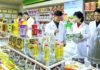


North Korea operates around 280 state-run grain shops nationwide to smoothly control the acquisition and supply of food, but there are clear differences in the quality of the grain sold in shops in Pyongyang and shops in other regions of the country.
Speaking on condition of anonymity for security reasons, a Daily NK source in Pyongyang said Friday that a grain shop in Pyongyang’s Jung District sold grain twice last month.
State-run grain shops usually sell grain twice a month, once in the first half of the month and once in the second half. However, the shops sometimes sell grain only once during months with national holidays, or for other reasons, including circumstances specific to individual grain shops.
The shop in Jung District sold grain for a five-day stretch in the first half of August, and for a two-day stretch in the second half of the month.
In the first half of August, it sold a kilogram of rice for KPW 4,000 and a kilogram of corn for KPW 2,100, while in the second half, a kilogram of rice cost KPW 4,200 and a kilogram of corn cost KPW 2,400. Those prices were 30% less for rice and 20% less for corn than at official marketplaces nearby.
“The rice and corn sold at the time was of good quality — clean and with no impurities,” the source said.
However, grain shops in areas outside of the capital city sell rice and corn that is of poorer quality than those sold in Pyongyang.
For example, a grain shop in an area near the China-North Korea border in Yanggang Province sold grain once in June, but the rice and corn it sold contained many impurities, including stones and chaff. In fact, the rice contained so many impurities that buyers needed to remove it all at home before they could eat it.
The shop’s corn, which had been imported from China, was also poor quality; it seemed clean on the outside, but it crumbled so easily it was hard for consumers to make food from it.
Last month, a state-run grain shop in Hoeryong, North Hamgyong Province, sold rice of such low quality that buyers had to remove all the impurities before they could eat it. Consumers complained that the shops would be better off not selling such rice, grumbling that they should save their money instead of buying such low-quality grain, no matter how cheap it was.
Grains are purchased from farms directly by people’s committees or imported on commission through trade agencies connected to people’s committees. The financial circumstances of the people’s committees govern the quantity and quality of the grains they can acquire from farms and trading agencies.
In fact, this situation even creates differences in the quality of grains sold by shops in the central districts and outlying districts of Pyongyang, the source said.
“In Pyongyang’s central districts, shops sell good-quality imported long-grain rice and corn. In comparison, shops in the city’s outlying districts lag far behind in terms of how much consumers can buy, the quality of the grains, and how frequently the shops sell their grains.”
Translated by David Black. Edited by Robert Lauler.
Daily NK works with a network of sources who live inside North Korea, China and elsewhere. Their identities remain anonymous due to security concerns. More information about Daily NK’s reporting partner network and information gathering activities can be found on our FAQ page here.
Please direct any comments or questions about this article to dailynkenglish@uni-media.net.