

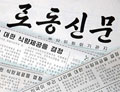
North Korea has endorsed recent change at the Ministry of Unification in Seoul, although it continues primarily to focus on criticism of former policy, part of a strategy aimed at taming the new man while continuing to shift the blame for the current standoff onto the Lee administration more generally.
Indeed, North Korea has not said anything directly about the successor to Hyun In Taek, Yu Woo Ik. Instead, it has kept the spotlight on former minister Hyun and his new appointment as special presidential aide on North Korea policy, describing him bluntly as a ‘confrontational zealot’ and a ‘political corpse’.
The North Korean authorities began the media offensive on Saturday, employing Rodong Shinmun, Chosun Central News Agency, then Sunday via Pyongyang Broadcast and Monday in Rodong Shinmun once again to describe Hyun’s dismissal as ‘meaning the total failure of confrontational policies,’ while referring to his new appointment in the President’s office as a statement that South Korea will maintain those confrontational policies, and also criticizing Hyun’s new position as ‘deriding of public opinion in South Chosun.’
The September 5th Rodong Shinmun article, entitled ‘Judgment for Confrontational Policies’, explained of the ministerial shake-up, “This shows that anyone who gets in the way of the reconciliation and unity of our race and unification of the motherland will get curses and denunciation, abandonment and condemnation, followed by a stern judgment.”
Naturally, criticizing the former incumbent also works to threaten the new unification minister with doom if he dares to adopt the same policies as his predecessor.
“As soon as Hyun In Taek became unification minister, he greatly reduced the authority and tools of his ministry and chased out personnel from the previous administration, only to replace them with members of the extreme conservative right. But as he stubbornly prolonged the confrontation between North and South under the banner of some mysterious principle, he systematically annihilated the achievements of the June 15 Joint Declaration,” the piece claimed.
It went on, “He obstructed various cooperation and exchange initiatives between our two sides and even destroyed the Mt Geumgang tourism operation, the precious child of the June 15 Joint Declaration. He insulted our sincere attempts to improve relations with a strategic shift, and brought about the breakdown of talks so long in the making.”
“Hyun In Taek turned the South-North Cooperation Fund totally into a fund for confrontation, based on some imaginary rapidly emerging change, and thus recklessly squandered the ambition of organized unification. This is but one of the traitor Hyun’s many crimes. His actions were rash ones that opposed unification and caused enormous damage to the reconciliation of our race, all while he sat atop the Ministry of Unification,” it further proclaimed.
This is obviously an attempt to pass the blame for the reduction of economic cooperation between the two sides and the suspension of Mt. Geumgang tourism, while making no mention of the North’s own actions at Yeonpyeong Island and in the sinking of the Cheonan. Instead, it reads as an expression of discontent at South Korea’s policies towards it to date, and as a stark message for the new minister.
The media articles also directly hint at a desire for a return to a policy of engagement, reaching out to sources of pride for the Democratic Party.
In a piece on Monday entitled ‘The way forward is in respect for and a return to the North-South Joint Statement’, Rodong Shinmun wrote, “The most important issue in opening a path to improvement in inter-Korean relations is to honor and implement the contents of the June 15 Joint Statement and October 4 Inter-Korean Summit Agreement.”
It continued, “The South Chosun authorities are making the same old stock demand for an apology as a precondition to talks and improvement in inter-Korean relations, with made-up claims of provocation and responsibility over the Cheonan and Yeonpyeong Island.”
“Relations have not disintegrated because of the Cheonan or Yeonpyeong Island incidents. It is because of the confrontational policies of the South Chosun authorities. The incidents in question were a wider part of that,” it went on.
In proclaiming Hyun’s dismissal as ‘a victory for the progressives’ and ‘a no-confidence motion from Democrats and other opposition parties,’ it is evident that North Korea hopes to buttress the Democratic Party and other progressive groups moving towards the end of the election cycle.
Regardless of the Ministry of Unification leadership change, which can be said to have slightly benefited North Korea, it is unlikely that Pyongyang will discard its long held strategy of avoiding responsibility at all costs while arousing internal hostilities, the classic ‘South-South conflict’.









