Amid North Korean government efforts to have people sign up for a new insurance scheme, Daily NK has learned that people who die from exposure to radioactive material are not eligible for insurance payouts.
According to materials written by the Chosun Minjok Insurance General Company recently obtained by Daily NK, “provider insurance” is a type of life insurance that provides payouts to the family of the subscriber if he or she dies due to an unexpected accident or disease.
The dictionary definition of “provider” is “a person who supports a dependent.” Provider insurance thus provides payouts to people with dependents who die due to an accident or illness.
According to the materials obtained by Daily NK, “provider insurance covers accidents” or “illnesses” that “harm the life” of the subscriber.

Accidents can include traffic accidents, fires, falls (off of buildings, for example), and “collisions,” while illnesses can include “chronic diseases,” “sudden diseases,” and death due to old age, according to the materials.
The materials stress that the insurance covers the “economic difficulties” suffered by a provider’s family members, and that these payouts are an expression of General Secretary Kim Jong Un’s “love of the people,” which is aimed at “stabilizing people’s lives.”
The materials also point out instances where people would be ineligible for payouts, including in cases where harm or death was “intentional,” or involved crime or “gross negligence.”
“Death of the subscriber due to intentional actions by the beneficiary, death that occurs in the process of criminal activity or violence perpetrated by the subscriber, and death of the subscriber after he or she received legal sanctions following a ruling by a court or while under such sanctions” are ineligible cases for payouts, according to the materials.
The materials also state that “death due to war, military action, nuclear radiation and nuclear pollution” are cases where subscribers are ineligible for payouts.
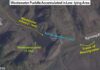
The inclusion of “nuclear radiation” and “nuclear pollution” in the materials suggests that subscribers to the insurance scheme living near North Korea’s nuclear test sites, such as the Punggye-ri site in North Hamgyong Province – an area known for significant nuclear radiation leakage – may not be eligible for insurance payouts in the event they die.
South Korea’s Ministry of Unification reported in 2018 that following radioactive exposure tests conducted on 10 defectors from Punggye-ri and its surrounding areas five of the defectors had traces of exposure to radioactivity.

According to South Korea’s Financial Supervisory Service, South Korean insurance schemes can provide payouts to people dying or suffering from bodily harm or damage to their property regardless of the reason, whether the death, harm or damage is due to earthquakes, nuclear weapons, radioactivity or war.
North Korea’s provider insurance also appears to prevent people who face a high likelihood of death from signing up for the life insurance scheme.
“Soldiers, people who are under criminal sanctions, those suffering from incurable diseases when they first sign up for provider insurance, and those over 65 years of age when they first sign up for provider insurance” are ineligible for the insurance scheme, according to the materials.
North Korean authorities likely intend to lower the number of payouts they would have to make by preventing people who are more likely than others to die because of poor or dangerous living conditions such as soldiers, criminals, and those suffering from serious diseases.
The country’s provider insurance appears to be “term life insurance” rather than “whole life insurance.”
Term life insurance provides payouts to subscribers over the course of a designated period, while whole life insurance provides coverage over the entire life of the subscriber.

The materials obtained by Daily NK show that the insurance scheme is limited to one year. After one year, subscribers must sign-up again for the insurance scheme.
“Provider insurance covers providers aged 20 to 60” and “people over the age of 60 can extend their provider insurance plan,” according to the materials.
The materials also state that people over the age of 60 who extend their insurance plan have the same coverage while they have to pay premiums based on this extended insurance plan.
“All people aged 20 to 70 can sign up for the insurance plan,” according to the materials.
According to a report published by the UN Population Fund and the Korea Population, Health and Welfare Association last year, North Korea’s life expectancy is 72 years old. As a result, the likeliness that North Korea will provide payouts to people who die of natural causes is very slim.

There is a high likelihood that North Koreans will pay their insurance premiums without ever getting a payout when they die.
The North Korean insurance scheme requires people to report a death or accident within 72 hours to receive payment, and they must submit insurance compensation-related documents, including a certificate of death, within 15 days. Failing to do so means that they will not be able to receive compensation.
These are extremely short periods of time when considering North Korea’s traditional funeral culture and the country’s administrative system, which relies on bribes to grease the wheels.
North Korean authorities, in summary, have setup a range of devices that ensure North Koreans will have to pay their premiums with little guarantee they will receive payouts when they need them. The insurance scheme could, as a result, provide the country with a needed stream of funds. Indeed, it appears North Korea’s move to coax people to sign up for the insurance scheme is aimed at just that.