

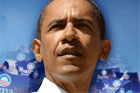
North Korea is expected to show a gentle face towards the new U.S. leadership, as Barack Obama has tried to set forth a conciliatory diplomatic manner in advance.
The President-elect, Obama succeeds to the Democrats’ traditional policy towards North Korea. He is opposed to the Bush administration’s one-sided policies and in favor of a multinational approach; to try to solve the nuclear problem through both bilateral talks and the Six Party Talks.
Obama has shown a different attitude to President Bush, who included Kim Jong Il in his “axis of evil,” by stating in the CNN/YouTube debate in July of last year that he would meet with the leaders of Cuba, Iran, Syria, Venezuela, and North Korea without precondition.
General predictions regarding the content of negotiations with North Korea say that Obama will deal with missiles, reduction of conventional armaments and human rights issues in the same way as the Clinton administration, instead of focusing on the nuclear issue alone.
It is not clear whether North Korea likes the Obama policy. However, the Chosun (North Korea) Shinbo stated on June 9 that, “Obama, who has declared openly his willingness to meet the leader of Chosun without any preconditions is better than McCain, a puppet of the NeoCons and an imitation of Bush.”
Through Rodong Shinmun, the Workers Party-run newspaper of North Korea, of Ocboter 16, North Korea expressed its interest in Obama’s bilateral negotiations, saying that, “McCain’s criticism of Obama’s intent to meet the leaders of hostile countries was so naïve.”
Professor of North Korean Studies at Korea University Yoo Ho Yul said that, “North Korea cares so much for Obama that Ri Gun, the top American affairs official at the North Korean Foreign Ministry, previously tried to contact associates of the President-elect.”
However, as the basic principles of the U.S. policy towards North Korea can hardly change, the North Korean view of the U.S. as the “primary enemy” cannot be reversed. The only clear thing is that North Korea may have a great interest in benefits generated from the supple approach of the Democratic Party.
Professor Yoo thinks that North Korea expects that threats to its system will be reduced under the soft-diplomatic policy of the next administration.
“North Korea will try to gain as much benefit as possible from the working group meetings, while making optimistic gestures to the U.S. in the feasible bilateral meetings,” he added.
North Korea will not hasten the negotiations because it has to take care of the process of nuclear disablement and also keep in tune with Kim Jong Il’s condition.”
Researcher of the Sejong Institute Song Dae Sung noted that, “North Korea might welcome Obama’s win because it can pursue economic gains through direct dialogue between both sides’ working groups and also aim at political effects such as the withdrawal of U.S. Forces in Korea.”









