
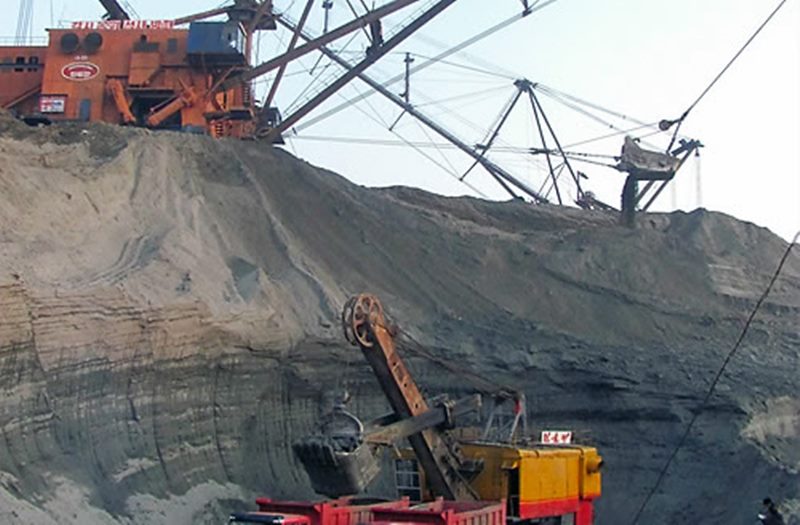
Winter is fast approaching in North Korea, and sources in some parts of the country report that newly-built coal briquette factories are opening one after another.
“As the winter season is approaching, new coal briquette factories are being exempted from Party tasks so they can focus solely on production,” a source in North Pyongan Province said during a conversation with Daily NK on November 14.
“Party tasks include jobs like planting trees, road maintenance, and other national-level construction tasks that are directed towards factories and businesses by the North Korean government.”
North Korea generally mobilizes its citizens and businesses when it requires labor for national projects. For example, in October several factories and businesses were ordered to participate in the building and maintenance of roads and railroad tracks connecting areas between Samjiyon and Hyesan. Despite the routine frequency of such tasks, coal briquette factories are receiving a special exemption so they can focus on production.
The policy appears to be in response to international sanctions on the export of coal. With coal products now unexportable on account of international sanctions targeting North Korea for its nuclear and weapons programs, the focus is switching to domestic consumption. In addition, the regime is providing benefits to citizens who choose coal products over firewood for heating this year, in conjunction with reforestation efforts.
However, the poor quality of the coal briquettes produced by the factories is causing momentum to falter. “Despite getting exemptions from Party tasks and being able to focus on briquette production, the quality is still nowhere near as good as what local craftsmen are able to make themselves,” a source in South Pyongan Province reported, noting that due to the difference in quality, briquettes made by craftsman are becoming more popular than those sold by the factories.
Nevertheless, the price of coal has been rising due to the increasing production from briquette factories and the demand for heating.
Both sources reported that the price for one ton of coal has risen from 175,000 KPW in September to 180,000 KPW in October and as high as 182,000 KPW in some areas.
*Translated by Brian Boyle