

Rising food prices and exchange rates in North Korea are sharply eroding the purchasing power of vulnerable households. Prices have climbed sharply, but incomes have not kept pace. For many families, a single earner’s income is no longer enough to survive.
A Daily NK source in South Pyongan province said Tuesday that many households are struggling. The hardship spans Pyongsong, Anju and Sunchon. “In the past, one person earning money in a household was enough to sustain a livelihood,” the source said. “Now that’s nearly impossible.”
Prices for food and daily necessities have risen sharply, the source said, while incomes have only inched up. That has widened the gap between earnings and expenses. As a result, having two or more family members earn income has become common among vulnerable households.
As of July 30, one kilogram of rice was trading for 40,000 North Korean won at the Pyongsong market. One kilogram of corn cost 10,000 won, while rice prices have risen roughly tenfold from before the COVID-19 pandemic and about threefold from a year ago. Corn prices have more than quintupled from pre-pandemic levels.
People who sell goods at the market earn only about 7,000 to 10,000 won a day on average, according to the source. Working all day barely covers the cost of one kilogram of corn. They also must pay for cooking fuel, side dishes, and various fees demanded by workplaces, schools and neighborhood watch units. Market earnings alone fall far short.
“It now takes several people in a family earning together just to get by,” the source said. “Food prices and the exchange rate keep climbing so fast. People are even saying, ‘Today’s prices are the cheapest they’ll ever be.'”
Rising prices for the won-dependent
The price surge weighs especially heavily on vulnerable households that rely solely on North Korean won income. People holding foreign currency are relatively insulated from the won’s declining value as the exchange rate rises, but households dependent on won income inevitably see their real purchasing power fall as prices climb.
“The market now offers more variety and better-quality goods, but for people without money, it’s all out of reach,” the source said. “You’re hungry, and the food is right in front of you, but you can’t afford it. That frustration is far greater now than in the past, when food itself was simply scarce.” A more abundant market has instead made vulnerable households feel the wealth gap and their own poverty more acutely, the source explained.
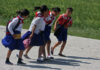
Some vulnerable households are now supplementing their main income with subcontracted piecework, according to the source. Common jobs include making wigs, false eyelashes, straw hats and embroidery. Children who are still students are joining in to ease their parents’ burden.
“Now, anyone in a vulnerable household who can manage even a spoonful of rice has to go out and earn money,” the source said. “Children who should be out playing are being pushed onto the front lines of making a living. Parents feel proud of their children for pitching in. But they also feel deep guilt for not being able to fulfill their duty as parents.”
Reporting from inside North Korea
Daily NK operates networks of sources inside North Korea who document events in real-time and transmit information through secure channels. Unlike reporting based on state media, satellite imagery, or defector accounts from years past, our journalism comes directly from people currently living under the regime. We verify reports through multiple independent sources and cross-reference details before publication.
Our sources remain anonymous because contact with foreign media is treated as a capital offense in North Korea — discovery means imprisonment or execution. This network-based approach allows Daily NK to report on developments other outlets cannot access: market trends, policy implementation, public sentiment, and daily realities that never appear in official narratives.
Maintaining these secure communication channels and protecting source identities requires specialized protocols and constant vigilance. Daily NK serves as a bridge between North Koreans and the outside world, documenting what’s happening inside one of the world’s most closed societies.