
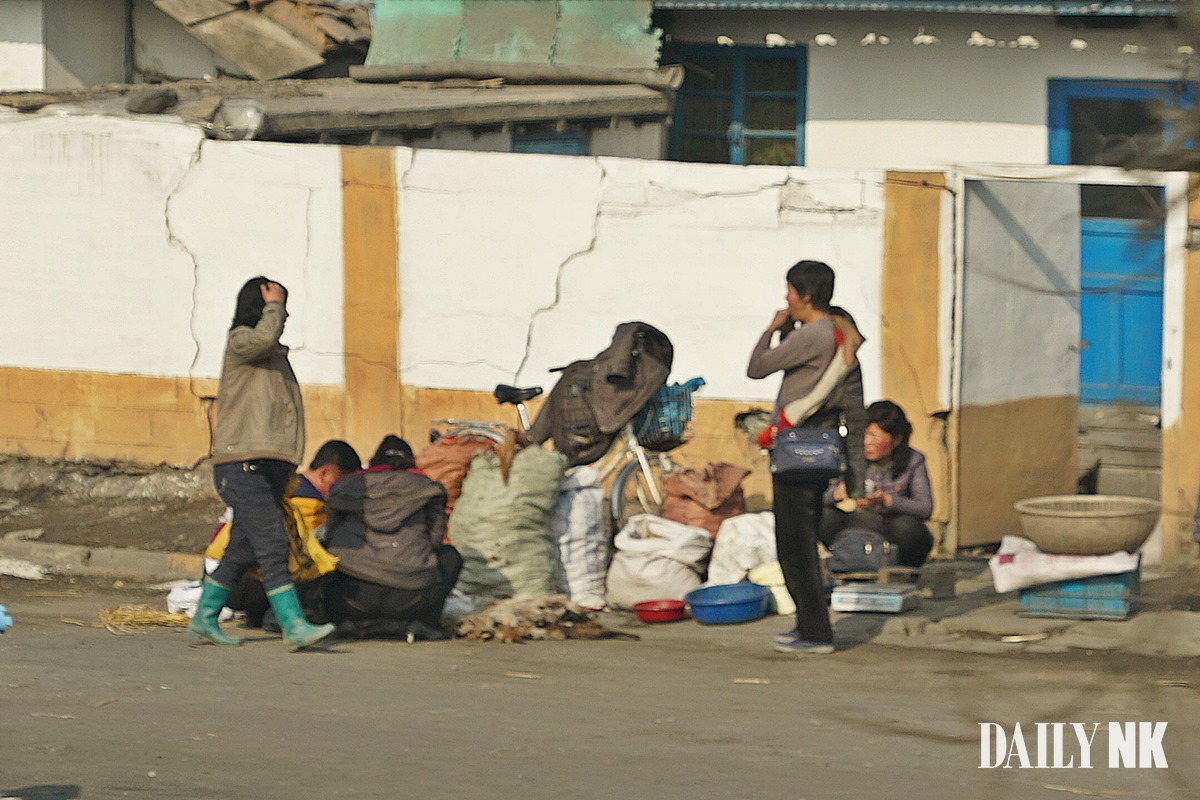
Clothing traders in Hyesan, Ryanggang province, are smuggling fall clothing from China and bringing in winter apparel samples to prepare for the cold season, with a focus on wealthy customers rather than ordinary consumers.
“Hyesan clothing traders are currently importing fall clothing and working on winter clothing samples,” a source in Ryanggang province told Daily NK recently. “Due to reduced marketplace trading from rising prices, luxury clothing imports targeting the emerging wealthy class are more prominent than goods for ordinary residents.”
Fall clothing sales are now in full swing at North Korean markets, with hoodies and jackets showing particular demand. The fall clothing smuggled by Hyesan traders is supplied wholesale to other regions, but unlike previous years, trading isn’t active, forcing clothing traders to adjust import quantities.
“These days, many people ask about clothing prices at markets, but actual purchases rarely follow,” the source said. “So traders are reducing quantities to match reality and only bringing in what they can actually sell.”
The overall reduction in trade volume is cutting into clothing traders’ profits.
Winter samples target luxury buyers
Some clothing traders are bringing in Chinese winter clothing samples to test the market ahead of the cold season. They’re importing small quantities of knitwear and padded jackets in various designs and price ranges to gauge residents’ reactions, then preparing imports focused on items with high sales potential.
“Officials’ wives and wealthy people care a lot about their appearance, so clothes that look high-end sell well even if they’re expensive,” the source explained. “Some traders are targeting economically capable residents rather than low-cost mass-market products, prioritizing imports of luxury winter coats and knitwear.”
Recent currency spikes and rising prices have hurt consumer confidence, causing mass-market products to sell poorly at Hyesan’s marketplace and others across the country. Meanwhile, luxury goods aimed at the wealthy continue to see steady demand, underscoring the growing gap in spending between ordinary residents and the rich.
Meanwhile, as more people seek imported medicines like cold remedies and fever reducers at markets, clothing traders are smuggling pharmaceuticals alongside their clothing operations.
“Various domestic medicines are sold at markets, but people still prefer imports,” the source said. “During seasonal changes and winter, cold medicine, fever reducers and painkillers sell particularly well, so merchants’ demand for pharmaceuticals is growing as they try to secure supplies in advance.”
He added: “Medicine is an essential necessity, so demand doesn’t decrease even when living conditions worsen. There’s no worry about items not selling, and if borders close like during COVID, imports could be cut off entirely. Securing supplies early can generate huge profits, so traders bringing goods from China are actively smuggling in medicines.”