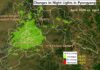


North Hamgyong province recently held a meeting to review results from August’s month-long electricity conservation campaign.
A source in North Hamgyong province told Daily NK on Tuesday that the provincial government convened the meeting early this month to “review energy-saving efforts at agencies and neighborhood watch units throughout the province in August.”
According to the source, Chongjin was named the province’s best energy-saving city. Despite hosting several first-grade state enterprises, the city was considered a model of energy conservation and “cross production,” with electricity consumers producing goods in shifts to use energy efficiently.
At the opposite end, Onsong county ranked last due to poor energy management by agencies and weak electricity conservation results.
Local cities and counties also conducted intensive surprise inspections of neighborhood watch units in August, cracking down on many households for violations. The meeting highlighted several cases.
Political loyalty through power control
The regions with the most violators were Kyongsong county, Kilju county and Hoeryong, criticized for low public awareness about energy conservation and frequent illegal electricity use — namely, power theft.
In these areas, people were caught using electricity illegally in secret because nights and early mornings are cold and kindling is expensive. Some families used stolen electricity for electric heaters, which consume significant power.
North Hamgyong province called such infractions “anti-socialist behavior that ignored the state’s energy conservation policy,” warning that households caught in the latest sweep could face both public criticism and background investigations.
“The central objective wasn’t simply to encourage people to save electricity, but to test public political loyalty while controlling their daily lives,” the source said. “Pyongyang believes energy shortages are an opportunity to ideologically test the public and quietly ordered authorities to keep people politically alert through severe crackdowns and strong criticism.”
In response, people complain that basic survival has become criminalized and they must endure harsh treatment with no alternatives. Residents say electricity shortages have evolved beyond simple inconvenience into a source of psychological pressure and daily fear.