
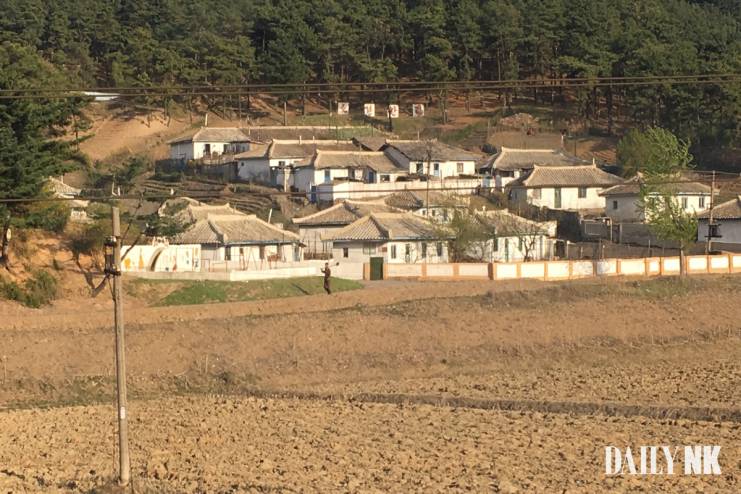
The North Korean authorities have been identifying people who have moved from the countryside to cities without registering their new residence and sending them back to those same rural areas, Daily NK has learned.
“The provincial Ministry of Social Security is tracking down people who have returned to cities after being banished to the countryside and returning them to the places they were banished to,” a source inside North Korea told Daily NK on Monday. “The Ministry of Social Security has been moving forward with these efforts since the middle of last month in line with a decision made during the Fourth Plenary Meeting of the Eighth Central Committee.”
According to the source, North Korea’s Ministry of Social Security learned that people who had been banished to the countryside as punishment for political or economic crimes were bribing officials to allow them to return to cities. The ministry instructed each provincial branch in the middle of February to find all such people and send them back to the places to which they were banished.
According to this source, each provincial Ministry of Social Security branch completed its investigation of the individuals in question at the end of February and began sending them back to their place of banishment at the beginning of March.
The source told Daily NK that the family of an individual surnamed Kim was among those who have been returned to their place of banishment. The family had been banished to a remote area after relatives defected to South Korea in February 2015 but then moved to a town in Hwasong County, North Hamgyong Province, in January 2020.
While people who have been banished to remote areas are supposed to be unable to change their place of residence, the majority of them return to city life within a few years. Because Kim’s family was subject to banishment to the countryside, they had been giving bribes to the head of the people’s unit and to security officers every two or three months, the source said. But since Kim’s family was on the list of people being investigated, they ultimately had to go back to their place of banishment on Mar. 1.
“Because of a recent shortage of agricultural workers, the authorities have been sending lots of young people to rural areas. People who are ‘enemies of the revolution’ are slipping out of rural areas, so the Ministry of Social Security was instructed to crack down on them,” the source said.
Some of the people being sent back to the countryside are very upset over the authorities’ actions, the source said. In addition to feeling they have already spent enough time in the countryside, they had also given money and other bribes to cadres at the Ministry of State Security and the Ministry of Social Security so they could return to the city.
“The people who had gone back to the cities are those who had married city dwellers or who had saved up money in the countryside and purchased houses in the cities,” the source said. “Given the difficulty of registering a new residence without money or connections, most of them had been unable to get their move approved by the authorities.”
On Feb. 27, a discharged military officer in Masan-dong, Hyesan, in Yanggang Province, reportedly complained to a security officer who informed him that he had to move back to his former residence because his current residence was not registered.
The discharged officer, surnamed Koh, retorted that when he had tried to register his current residence, officials asked for money on various pretexts without actually processing his registration. Koh said he would not be facing these problems if the government had provided him with a house.
Koh, who was born in a city, served on the front line in Gangwon Province as an officer in the military. Following his discharge in 2015, he and his family returned to his place of birth, where his parents live. But his parents, who could barely afford to eat gruel, were in no position to support Koh and his family.
After weighing their options, Koh had his parents sell their house and took the whole family to the countryside, where they used the proceeds of the sale to buy a small house and some land. They made some money through farming the land and gathering firewood and used that money to buy a house in Masan-dong, Hyesan, in December 2019, where they have been living for more than two years. But business dried up during the COVID-19 pandemic, which kept them from registering their new residence.
“Koh wasn’t born in the countryside; he’d only gone there for a while to overcome financial troubles and then came back to the city,” the source said. “He’s in trouble because officials kept asking for money without actually registering his new residence. He expressed his outrage at the authorities for trying to send him back to the countryside without treating him with the respect he deserves for more than 20 years of service in the military.”
Please direct any comments or questions about this article to dailynkenglish@uni-media.net.