
North Korea has injected millions of dollars in emergency funds to prevent domestic fuel prices from spiraling out of control amid a surge in global oil prices triggered by the ongoing crisis in the Middle East, Daily NK has learned.
A source in North Pyongan province told Daily NK on Wednesday that Pyongyang issued an emergency directive on March 8 ordering provincial trade bureaus and banks to cooperate in freezing fuel prices by deploying several million dollars in combined funding. The directive followed a sharp rise in international oil prices driven by the Middle East situation, which the authorities have characterized as an economic crisis equivalent to a quasi-wartime emergency.
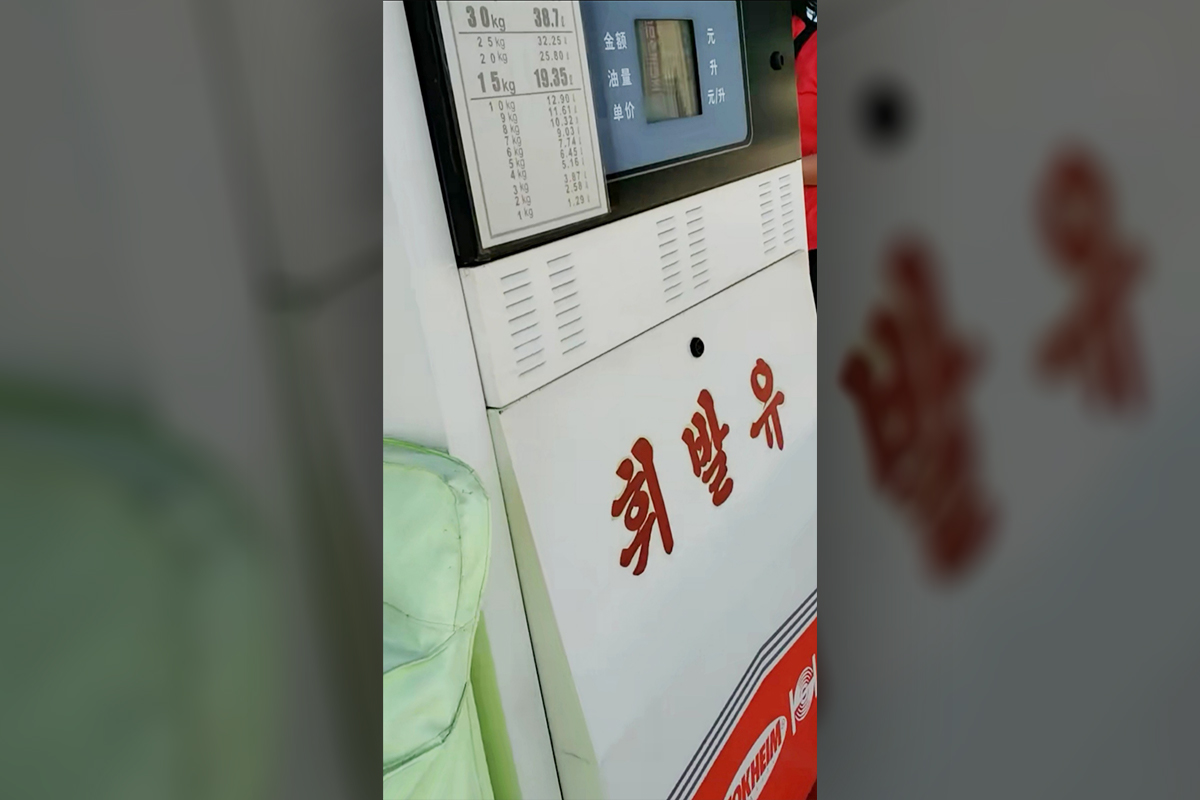
In response, the North Pyongan province trade bureau immediately released $2 million from its own foreign currency reserves. The provincial bank separately approved 30 billion North Korean won in loans to state-run fuel stations, known as yonyu panmaeso, to offset the price increases.
Priority regions and subsidy targets
Fuel stations in areas with high agricultural machinery usage, including Jongju city and Yomju county, were designated as priority support recipients. Provincial authorities framed the intervention as a subsidy measure aimed at rolling back prices to late-February levels after fuel costs surged sharply in early March.
“Due to the situation unfolding in Iran, international oil prices skyrocketed by more than 20% almost overnight,” the source said. “The state judged this to be an economic crisis on par with a quasi-wartime situation and moved quickly to respond.”
Enterprises, farms, and transport operators that depend heavily on fuel have welcomed the intervention, though the source noted that cautious skepticism remains widespread.
“At the priority fuel stations, there are already long lines of enterprise managers, farm representatives, and even private individuals who drive seobich’a (private vehicles used as informal taxis) who heard the news and rushed over,” the source said. “They say the rising prices had been a daily source of stress, and that the news of the party releasing funds to stabilize prices came as a relief. But they’re taking a wait-and-see approach, saying they’ll have to see how many days this actually holds.”
Meanwhile, officials within the North Pyongan province trade bureau are circulating reports that Chinese trading agents in China’s three northeastern provinces, concerned about production disruptions in North Korea, have agreed to urgently supply approximately 5,000 tons of gasoline and diesel at prices 30% below international market rates.
Doubts about long-term stability
Trade bureau officials expressed cautious relief, but privately voiced concern about the outlook. “Right now we can hold on because supplies are coming in from China, but if the situation drags on, we won’t have any options left,” one official was quoted as saying. Another added: “For now, with the central government issuing such a sharp directive, prices will stabilize, but if global oil prices keep rising, our economy will eventually grind to a halt.”
Daily NK’s regular market price survey found that as of March 15, gasoline and diesel were trading in North Korean markets at 50,800 North Korean won (approximately $22.70 USD) and 47,500 North Korean won (approximately $21.20 USD) per kilogram, respectively. Those figures represent increases of roughly 4 to 5% from the previous survey conducted March 1.
Fuel prices had spiked by more than 25% during the first week of March, but the emergency measures appear to have stabilized markets in the weeks since, according to the source.
Reporting from inside North Korea
Daily NK operates networks of sources inside North Korea who document events in real-time and transmit information through secure channels. Unlike reporting based on state media, satellite imagery, or defector accounts from years past, our journalism comes directly from people currently living under the regime. We verify reports through multiple independent sources and cross-reference details before publication.
Our sources remain anonymous because contact with foreign media is treated as a capital offense in North Korea — discovery means imprisonment or execution. This network-based approach allows Daily NK to report on developments other outlets cannot access: market trends, policy implementation, public sentiment, and daily realities that never appear in official narratives.
Maintaining these secure communication channels and protecting source identities requires specialized protocols and constant vigilance. Daily NK serves as a bridge between North Koreans and the outside world, documenting what’s happening inside one of the world’s most closed societies.