
With North Korea moving quickly to demolish South Korean facilities in the Mt. Kumgang tourism zone, there is speculation that the authorities may reuse some of the waste from the demolished structures.
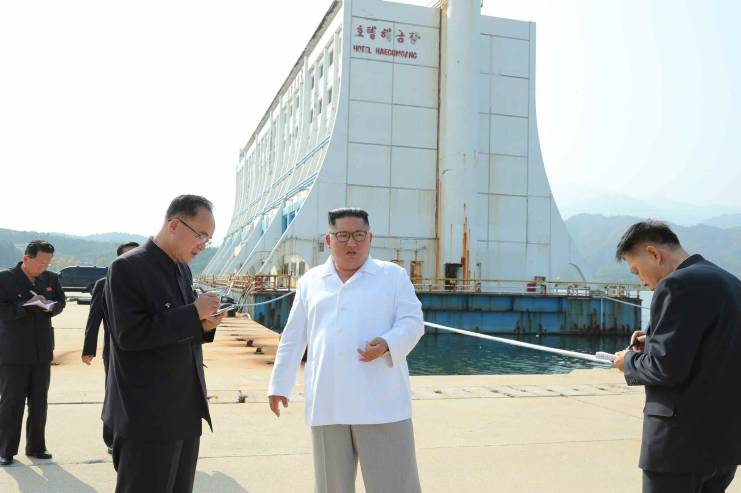
According to a Daily NK source in North Korea on Monday, North Korean authorities plan to complete the demolition of the Hotel Haegumgang by the end of the month.
While North Korea is incinerating most of the material from the demolition site, it is reportedly transporting scrap iron to steelworks and other metal factories. There are few reusable materials as the facility is quite antiquated, but the scrap iron is worth recycling, the source said.
Some 89.2 meters wide, 27.6 meters deep and weighing in at 11,958 tons, the Hotel Haegumgang is a floating hotel built in the late 1980s by an Australian businessperson who invested USD 45 million into the project. Located originally in Australia, it was later sold to Vietnam, where it reopened in Ho Chi Minh City.
Hyundai Merchant Marine brought the hotel to South Korea in October 2000, but moved it to North Korea’s Mt. Kumgang. In 2001, ownership of the hotel transferred to Hyundai Asan, which purchased it for KRW 13 billion.
Just how much scrap iron North Korea has collected after demolishing parts of Hotel Haegumgang remains unknown, but the country will apparently make good use of the metal.
Given that international scrap iron prices are continuously climbing, surpassing KRW 600,000 (around USD 480) a ton, the cash value of the iron emerging from the demolition of South Korea facilities in the Mt. Kumgang tourism zone must be considerable.
UN Security Council sanctions on North Korea ban the country from importing metal or steel.
For decades, North Korea has poured research personnel into studying ways to expand the production of so-called “Juche steel,” which is made using anthracite rather than imported coke. However, North Korea still produces little steel, and of poor quality at that.
North Korea has responded by officially tasking local residents with collecting scrap iron, emphasizing recycling.
Moreover, with the country bolstering its policies of self-reliance and self-sufficiency since the rupture of the US-DPRK summit in Hanoi in 2019, Pyongyang has been touting construction and the strengthening of its nuclear arsenal. So the need and demand for steel is growing.
The source said only two places in North Korea require steel: the construction of 50,000 homes in Pyongyang or in munitions factories.
According to Voice of America (VOA)’s analysis of satellite photos taken by satellite image service Planet Labs on Apr. 19, the entire upper section of the seven-story Hotel Haegumgang had been removed, leaving only one to three stories remaining. Building waste was piled up in empty interior spaces.
VOA also reported that the clubhouse and eight lodgings of the South Korean owned Kumgangsan Ananti Golf & Spa Resort were also demolished, with only their concrete frames remaining.
South Korea’s unification ministry has demanded through the inter-Korean liaison office an explanation for the demolition of South Korean facilities in the Mt. Kumgang tourism zone, but North Korea has remained silent.
The source said the authorities believe that they can arbitrarily decide when to demolish the facilities since they have already informed South Korea that the facilities would be pulled down.
“The issue is important enough for the Supreme Leader [Kim Jong Un] to have attended a working-level meeting with the Culture and Tourism Bureau, the Paektusan Institute of Architecture, and the Seventh General Bureau, so the demolishing work will continue given that it has been okayed [by the North Korean leader],” he added.
Translated by David Black. Edited by Robert Lauler.
Please direct any comments or questions about this article to dailynkenglish@uni-media.net.