

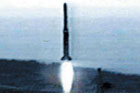
Military tensions on the Korean Peninsula are still rising, with North Korean authorities announcing on the 9th that they would strike a heavy blow at any attempt to intercept the Kwangmyungsung-2 “satellite” launch and will cut off military communications between North and South during the “Key-Resolve” U.S.-Korea military drills.
Following North Korea’s move, the Ministries of National Defense and Unification, along with other South Korean government offices related to North Korean military activities, have started discussing countermeasures, especially regarding the security of residing South Korean citizens in Kaesong, issues of visiting the North, and the risks of accidental military collision.
The reason why the North embarked on such an abrasive course seems to be to provide a prior rationale for maintaining that Key-Resolve is an invasion drill aimed at North Korea. At the meeting with the UN Command, North Korea urged strongly that Key-Resolve not be undertaken, and the North Korean Committee for the Peaceful Reunification of the Fatherland threatened the security of South Korean civilian aircraft flying in the North’s airspace during the drill.
A researcher in the Korea Institute for National Unification, Park Young Ho said in an interview with Daily NK, “It is diplomatic rhetoric to express the thought that the South Korea-U.S. joint military drill will deteriorate inter-Korean relations.”
Park analyzed, “It is to appeal to the U.S. not to take part in an invasion drill, but to take part in military negotiations with the North. It, eventually, is to threaten South Korea, a hostage, in order to generate a dialogue with the U.S.”
Kim Hwan Seok, researcher at the Institute for National Security Strategy, predicted, “By raising tensions gradually, the North is trying to block the South Korea-U.S. military drill. However, suspension of military communications may indeed be carried out.”
Although North Korea has announced reprisal attacks were the interception of their projectile to be achieved, the possibility of carrying out the threat is low, because it could cause an all-out war.
Kim further foresaw, “A counter attack against the North could negatively affect the Obama administration, which has mentioned direct negotiations between the U.S. and North Korea, so it will take a cautious approach. Therefore, the possibility of real military action is low.”
In Park’s interpretation, “Regardless, the launch will be accomplished.”









