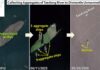


Circular sightseeing boats recently launched on Pyongyang’s Taedong River represent a strategic blend of foreign currency generation and regime promotion, offering wealthy North Koreans and tourists an unusual entertainment experience that serves multiple political purposes.
The round boats — equipped with bulgogi grills so passengers can sightsee while enjoying Korean barbecued meat — began full-scale operations this summer, according to a Daily NK source in North Korea recently. Most notably, the boats accept only dollars every Thursday, a deliberate strategy by North Korean authorities to absorb foreign currency.
Pricing is set at $10 per hour for four people, $15 for six people and $30 for 12 people. Four servings of bulgogi come with the basic fare, though additional food or alcohol costs extra.
At current exchange rates, $10 equals 430,000 North Korean won — enough to buy 20 kilograms of rice. “Given today’s prices, this sort of luxury would be a pipe dream for ordinary people,” the source explained.
The boats offer a premium $100 nighttime option featuring decorative lighting. However, this experience remains far beyond ordinary citizens’ reach — only families of trading company employees, wealthy North Koreans and children of powerful officials can afford it.
While ordinary people might grumble about the boats, the authorities’ underlying strategy focuses on “absorbing foreign currency.” Initially, wealthy North Koreans invested their capital in the service, but state agencies now operate and manage the boats. “This is because the authorities believe the service could boost the party’s finances,” the source said.
Luxury dining as political tool
The service carries special significance given that relaxing over meat and liquor has traditionally been condemned in North Korea as decadent capitalist behavior. It also reveals calculated political aims designed to boost loyalty through regime promotion.
“The government is dressing it up as evidence of its ‘love of the people’ and ‘improvement of the people’s lives’ based on the slogan of ‘civilized lives,'” the source said. “In particular, it intends to boost young people’s loyalty and reduce desires to abandon the regime by letting them experience a ‘paradisiacal life provided by the state.'”
Young North Koreans, particularly children of wealthy or powerful families, now consider the round cruise boats essential date venues or “must-have” experiences, similar to how they view car rental services widely available in Pyongyang’s Hwasong District.
“Young people who have experienced the boats say it feels like they’re aristocrats, like they’ve seen in foreign movies,” the source noted. “People show off their cultural sophistication through such experiences, while the government promotes itself by letting people enjoy a bit of romance thanks to the Supreme Leader’s kindness.”
North Korean authorities, who have been working to attract foreign tourists, are reportedly considering expanding the round cruise boats with grills to other regions, including Wonsan, Nampo, and Chongjin. This suggests they aim to achieve three simultaneous goals — boosting domestic consumption, absorbing foreign currency, and promoting the regime.
“The government wants to expand high-end consumer culture beyond Pyongyang to the provinces as a symbol of development,” the source said. “However, because only some people can enjoy the boats while the rest might feel relatively deprived, the authorities will carefully coordinate the timing of expansion.”