

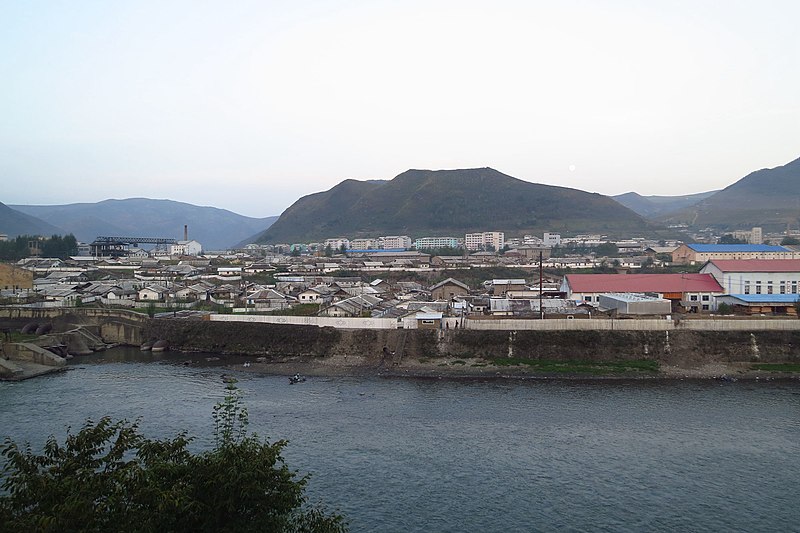
Hyesan authorities recently ordered the demolition of houses along the Yalu River, forcing many families to turn to “shared housing,” Daily NK has learned.
“The number of families trying to find houses they can live in together has been increasing following orders to tear down houses alongside the Yalu River,” a source in Yanggang Province told Daily NK yesterday, speaking on condition of anonymity for security reasons. “This has led to a significant increase in rents for shared housing in Hyesan.”
According to the source, an order was given in early June to tear down houses near the embankment on the Yalu River. The order specified that families on the eviction list only had a couple of days to vacate their homes.
Residents of the Hyejang-dong neighborhood of Hyesan were instructed during a June 10 meeting of their inminban (neighborhood watch unit) that they should look into places to stay until new homes become available. The instructions were aimed at ensuring people were ready to vacate their house as soon as the demolition order is given.
With families on the eviction list searching high and low for empty rooms to rent, rental prices have risen at shared houses throughout the city, from downtown to the suburbs.
“The monthly rent for a spare room in downtown Hyesan was RMB 100 at the beginning of the month, but as of June 15, rent has doubled to RMB 200. On the outskirts of the city, the rent for a spare room has risen from RMB 30-50 to RMB 60-100,” the source said.
COVID-19 put a hold on many apartment construction projects
Families on the eviction list say the orders are especially onerous since they now have to find new accommodations on top of ongoing food shortages.
“Prior to the pandemic, new apartments were built and assigned before the old houses were torn down, which meant that evicted families didn’t need to look for shared houses. But now families are outraged to learn that they’re being evicted from their homes before construction has even begun on new apartments,” the source said.
In 2016, Yanggang Province began building new apartments at a distance of at least 500 meters from the border. Old homes were demolished to make way for road construction. But then the apartment construction projects were put on hold because of COVID-19.
“Before COVID-19, new apartments would be completed before the old homes were demolished. But now, the priority seems to be on knocking down the homes on the border and building a road through the area. That puts the evicted families in the difficult position of not knowing how long they’ll have to stay in a shared house while they wait for a new apartment to go up,” the source said.
“These demolition orders are purely designed to achieve the goal of strengthening the border without paying any mind to residents’ challenging living conditions. The authorities are devoting all their resources to securing the border, unconcerned whether residents may be left homeless in the process.”
Translated by David Carruth. Edited by Robert Lauler.
Daily NK works with a network of sources who live inside North Korea, China and elsewhere. Their identities remain anonymous due to security concerns. More information about Daily NK’s reporting partner network and information gathering activities can be found on our FAQ page here.
Please direct any comments or questions about this article to dailynkenglish@uni-media.net.







