

On Wednesday, North Korea announced plans to send a delegation to the funeral of Former President Kim Dae Jung.
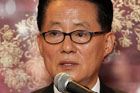
Democratic Party lawmaker Park Jie Won told reporters, “North Korea’s Asia Pacific Peace Committee has forwarded its intention to send a delegation, bringing a wreath from Kim Jong Il, to Im Dong Won, the director of the Kim Dae Jung Peace Center.”
However, North Korea has reportedly not signaled its intention officially to the South Korean administration.
The Ministry of Unification has analyzed the statement announcing the planned condolence delegation, which was apparently delivered by fax. An official inside the South Korean administration said that there is no chance of the delegation being refused.
The North’s decision to send a delegation to the South was always likely, since Former President Kim was the person who signed the June 15 Joint Declaration, considered by North Korea to be a turning point in inter-Korean relations. From the North’s perspective, the funeral delegation might also be aimed at reminding the South Korean people of the July 15 Joint Declaration at a time when they are looking back at Kim’s life.
Additionally, North Korea may see a chance to soften critical assessments of the Sunshine Policy within South Korean society, again at a time when North Korea has hinted at a willingness to resume North-South cooperative enterprises like separated family reunions and tourism after the visit of Hyundai Group Chairwoman Hyun Jung Eun to Pyongyang.
Furthermore, North Korea can help galvanize supporters of the Sunshine Policy by virtue of its conciliatory gestures to the people of the South, who have inclined strongly towards a pragmatic and principled stance since the North’s nuclear tests and missile launches.
Finally, Pyongyang can continue to try and propagate Kim Jong Il’s benevolence after releasing two American journalists and a Hyundai Asan employee in recent weeks.
If they send a delegation, Director of the United Front Department and Director of the Asia Pacific Peace Committee Kim Yang Gun is likely to lead it, according to the precedent by which Song Ho Kyung, the Vice-director of the Committee, and three other officials formed the condolence delegation for former Hyundai Group Chairman Jung Ju Young’s funeral in 2001.
Vice-director of the United Front Department Lee Jong Hyuk, who visited Seoul in 2004, and Secretary of the Workers’ Party Kim Ki Nam have also been mentioned as possible members of the delegation.
However, experts on North Korea warn also of the adverse effects of the North’s delegation; it may inflame internal conflicts in South Korea due to the activities of the Democratic Party and supporters of the Sunshine Policy, who have been waiting for a chance to shift the incumbent administration’s policy.
Moreover, before sending the fax announcing a delegation, North Korea reportedly asked Park Jie Won, Director of the Kim Dae Jung Peace Center, about South Korea’s intention. This was allegedly because the North was trying to rouse conflict between the administration and civil society. It stems from the same logic as Hyundai Group Chairwoman Hyun Jung Eun’s visit to Pyongyang, by which North Korea appears conciliatory but is able to maintain a confrontational stance towards the South’s administration.
President of the Sejong Institute Song Dae Sung pointed out that, “We have to be sure not to distort memorial events for the late Kim Dae Jung into a forum for North Korean political propaganda.”









