

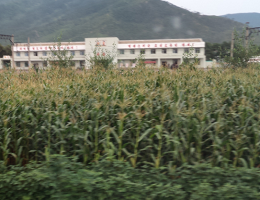
Although harvest season is approaching for the farmers of North Korea, this year’s outlook is already appearing bleak with reports that crops in provinces of North and South Hwanghae (the country’s breadbasket) and on the mountainsides of Ryanggang Province are withering due to a shortage of fertilizers and unseasonably warm weather.
“Fall is harvest time, but the usual glimmer in the faces of the farmers is absent,” a source from Ryanggang Province told Daily NK in a telephone conversation. “There are a lot of people voicing concerns that their harvest will be significantly smaller than last year.”
In Taehongdan County, known for its potatoes, projections are indicating that this year’s harvest will be at least 20 to 40 percent less than last year’s. These observations are based on samples carried out in pojeon [small divisions of cooperative farm production units] ahead of the full harvest, reported the source.
“Last year, each plant yielded roughly ten large potatoes, but it’s only about five to six this year,” the source added. “The expected harvest in counties like Paekam and Pochon is also said to be subpar.”
A different source in South Pyongan Province highlighted similar concerns, explaining that the harvest in Singye County in adjacent North Hwanghae Province (which is well known for agriculture) is also expected to be lower than expectations, to the concern of many farmers.
The South Pyongan-based source added that the problems with this year’s harvest appear to be due to uneven fertilizer distribution by the state, noting, “If you look at neighborhoods like Samhwa within Pyongsong, South Pyongan Province and other areas with a good harvest of vegetables and grains, these are all farms that receive a lot of support (fertilizers) from the agriculture ministry.”
“While the farms that received support from the government are expecting a yield similar to last year, things aren’t looking good for most regular farms,” she added.
The source in Ryanggang Province noted that the situation will likely be similar in the northern regions, with the state-sponsored 10.18 Cooperative Farm in Paekam County expected to outperform regular collective farms.
Facing a shortage of cash, the North Korean regime is said to be providing support only to areas that fall under leader Kim Jong Un’s range of field guidance locations, while neglecting ordinary collective farms. Residents have taken note of this trend, eliciting complaints that the central and provincial support being diverted to areas under Kim Jong Un’s purview is coming at the expense of needier regions.









