A source recently told Daily NK that a group of Chinese residents of North Korea who entered China last month via the Sino-Korean Friendship Bridge had asked the North Korean authorities to return to China when no signs emerged of renewed trade between the two countries.
In a telephone conversation with Daily NK on Tuesday, a source in China said the Chinese who entered China through the Dandong customs house by way of Sinuiju, North Pyongan Province, were “people who had remained in North Korea believing as recently as last year that trade would soon resume.” However, he said they recently decided to return with signs pointing to the Sino-North Korean border remaining closed.
He added that while the Chinese residents in question had been living on remittances sent by family and friends in China, they had continuously complained of difficulties.
South Korean broadcaster KBS reported that 150 Chinese residents of North Korea returned to China last month.
According to Daily NK’s own reporting, the Chinese who returned in mid-July had been living in different regions of North Korea, including South Pyongan Province and the Hwanghae provinces. The authorities reportedly allowed them to exit the country all at once after collecting their petitions to leave.
North Korean authorities allowed a group of about 40 Chinese residents to return to China via the Sino-Korean Friendship Bridge last December as well.
Subsequently, North Korea permitted several Chinese residents to return to China through the end of last year. Nonetheless, many Chinese residents reportedly believed at the time that there would be even greater demand for trade once the border reopened.
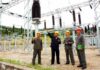
However, the source said that with North Korean authorities recently launching a sweeping inspection of trading institutions and strengthening control of the border with a concrete wall and high voltage wires, many of the remaining Chinese residents abandoned hope of renewed trade and decided to return to China.

About 3,000 Chinese residents were living in North Korea prior to the authorities allowing them to leave the country last year.
However, about 1,000 Chinese residents have returned to China since late last year.
Chinese residents, or hwagyo, can actively participate in North Korea’s economy because they carry North Korean ID cards, despite being Chinese nationals.
They participate in trade, traveling freely between North Korea and China. They also play an important intermediary role in importing from China supplies needed by North Korean authorities.
However, Chinese residents have faced limits to their trading activities since North Korean closed the border with China last year to prevent COVID-19 from entering the country.
With discontent among Chinese residents growing, North Korean authorities even issued special measures to support them.
In an order issued to provincial party committees last October, North Korean leader Kim Jong Un praised Chinese residents as an “important treasure” who have helped continue the friendship between North Korea and China, and called on the committees to ease “as much as possible” regulations on their business activities and to resolve issues they face in their daily lives.
Kim’s measures for the Chinese residents appears to be part of a diplomatic strategy with Chinese friendship, trade and aid in mind.
However, substantive difficulties faced by Chinese residents did not improve despite Kim’s measures, and with Chinese residents continuing to request permission to return to China, North Korean authorities allowed them to leave.
Meanwhile, there is also emerging concern that as Chinese residents return to China en masse, communication channels with the outside world will grow even narrower within North Korea.
Chinese residents are officially allowed to carry international telephones, and have played a role in relaying and distributing news and information about other countries within North Korea.
“As the border closure continues, communicating with those in North Korea is tough,” said the source. “If the Chinese residents leave North Korea, it will get even harder to learn what’s going on inside the country.”