

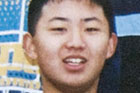
The North Korean elite, which is by no means blind to Chinese reform and subsequent economic success, may drive North Korea towards reform during any succession period instead of trying to preserve the status quo, but if the succession stabilizes under Kim Jong Il’s guidance for a substantial period of time then expect the elite to go in a more conservative direction as they seek to preserve their access to privilege, says a group of prominent experts.
Sohn Kwang Joo, Editor-in-Chief of The Daily NK, spoke about four potential succession scenarios after Kim Jong Il’s death at an academic seminar entitled, “The Transformation of the North Korean Regime Post-Kim Jong Il and the Role of the Elite,” which was hosted by the North Korea Strategy Center on November 10th.
“If dictatorship is to continue,” Sohn told the audience, “tensions among Kim Jong Il’s closest acquaintances and the rest may well appear.”
“The successor working alongside Jang Sung Taek may be promoted as a solution for the short-term, but once the gap between the political position of Jang Sung Taek and the young successor grows, it is likely that tensions and confrontation between Jang and his acquaintances and the successor and his backers will result.
While admitting the possibility of a collective leadership system, then, Sohn also predicted its swift demise. “It is highly probable that such a North Korean regime would collapse at an early stage due to internal power struggles,” he suggested, “In the case of long-term instability due to an ambiguous succession structure, the power of the elite might grow in the short-term, but it is likely that neither a consensus around the stability of the regime nor a mutually effective grouping would form.”
The reason, Sohn believes, is that the elite is not sufficiently politicized to be effective. “The existing elite amounts to just a group of individuals,” he explained, so “in the short-term, they are unable to play a revolutionary role. A political grouping, with the exception of the pro-Kim Jong Il camp, does not exist in the North.”
So, Sohn reminded the audience, “As long as Kim Jong Il is alive, internal tensions among the power elite will not influence the North Korean regime at all.”
Sohn also described some possible lessons from history, but was not confident of their applicability, “In the case of the Soviet Union, rapid marketization and regime change took place through the self-led revolution of the elite during the Perestroika period. In China, Deng Xiaoping and other victims of the Cultural Revolution succeeded in reforming the economy gradually, but it is quite difficult to predict whether the North Korean elite will be able to achieve reform in either of these ways.”
“The stabilization of the succession structure is a race against time,” added Ko Young Hwan from the Institute for National Security Strategy, who was also on the panel for the event, “if Kim Jong Il jointly rules for the next 10 years and is thus able protect his successor, then the continuation of the regime is nearly certain.”
If the third-generation dynastic succession manages to bed down, Ko predicted, then “the elite will devote itself to the state to the utmost due to the simple fact that they want their children to have access to the same privileges and benefits as they have.”









