

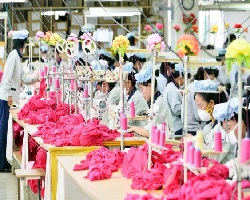
As South Korean assets from the inter-Korean
Kaesong Industrial Park remain frozen in the North, rumors are circulating that
Pyongyang might receive investment from its newly affluent middle-class, ‘donju,’
to run the complex autonomously.
“Word is that although employees have not
been able to go to work, and South Korean companies were expelled from the
complex, all of the production equipment is still just sitting there,” a source
from North Pyongan Province told Daily NK on Wednesday. “KIC workers from our
side have been reporting this news firsthand, thereby stimulating interest
among the donju about investing in the complex and turning this misfortune into a business opportunity.”
Two sources in South Pyongan Province and a
source in Pyongyang corroborated this news.
“Pyongyang donju engaged in joint clothing
manufacturing operations with China are excited about the promise of renting
out the complex, wasting no time in their efforts to seek out relevant
information,” the source said, explaining that much of this involves carefully
approaching cadres from the military and Party with whom they have ties and
trust in business endeavors.
Some of these cadres have said discussions
on “whether to reopen the park without the South and show them the North’s
strength and prowess” are imminent, and as such are giving hope to the
potential investors by telling them “production can get underway at any time seeing
that the complex is equipped with all the necessary, advanced machinery,”
according to the source.
Donju are confident that they will be able
to import raw materials from China and elsewhere and use Kaesong facilities to render
viable finished products. This assertion is predicated on successful existing
models of production using Chinese materials and equipment employed by Rungra
88 Trading Company, various clothing
export companies, and regular state-run factories.
“Donju can smuggle fabric in through
customs, and they believe there are no major problems since they already have
solid markets established by way of Chinese companies,” the source said. “The
leadership also has hopes of using the complex to foster growth in local
companies and bring in more foreign currency.”
This is why, she explained, there is
growing speculation that the state will try to run the complex independently to
fill its foreign currency needs, despite having declared the complex a
military-controlled area. “Since the talk of the potential connection between hard currency earned through the park and
the North’s nuclear program, it is unlikely it can get China involved on an
official level, but we can’t exclude the possibility of a backdoor deal,” she
noted.
The one major stumbling block standing in
the way is power, of which North Korea is in woefully short supply. After the
South pulled the plug on all electricity feeding the plant, “sorting out the
power supply to run the factories is going to be tough,” the source said.
And yet, she added, most are hopeful, “already
laying plans to use generators to run at least some of the factories in the
short-term.”









