

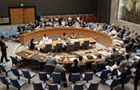
North Korea played its trump card, “a notice of absence” from the Six Party Talks on Tuesday. This was presumably because North Korea interpreted the UN Security Council President’s Statement, which claimed that the North Korean rocket launch was a violation of UNSC Resolution 1718, as a condemnation of North Korea’s development of their missile capacity.
North Korea issued a statement through the Foreign Ministry, which expressed its intent to withdraw from the Six Party Talks, utilizing decisive language like “never again.” Additionally, North Korea made it clear that it will adhere to the terms of the September 19 Joint Statement, stating that, “North Korea will not adhere to any agreements of the Six Party Talks.”
North Korea also clarified its intention to reinitiate it nuclear program and nuclear weapons stockpiling, saying that it will restore the Yongbyon nuclear facilities to their former condition and begin reprocessing fuel rods.
Raising a question of fairness regarding the UNSC President’s Statement, the North criticized, “The UN Security Council is the apparatus to accept intactly the U.S. burglary logic.”
In advance of the launch, the North Korean Foreign Ministry released a statement on the 24th of March, stating that, “If the UN Security Council sanctions launching the rocket, it is to negate the September 19 Joint Statement. If the September 19 Joint Statement is annulled, there will be no reason that the Six Party Talks exist any longer.” Therefore, North Korea’s more recent statement seems likely to be the first step towards the annulment of the September 19 Joint Statement and Six Party Talks.
North Korea also issued a warning through the Rodong Shinmun, the publication of the Workers’ Party, stating that, “Discussion on the missile launch in the UN Security Council will cause a complete rupture of the Six Party Talks and denuclearization. In this case, the North will take much stronger countermeasures.”
Considering that North Korea launched the rocket in order to strengthen its internal solidarity and seize momentum in negotiations, this recent series of statements and maneuvers can be seen as part of deliberate strategy in the North. There is evidence that North Korea is attempting to convert the Six Party Talks framework into a bilateral talks with the U.S. However, the intensity of North Korea’s reaction has been greater than expected, and subsequently, tensions surrounding the situation may be drawn out.
Yoon Duk Min, professor at the Institute of Foreign Affairs and Security interpreted that, “It was a North Korea’s brinkmanship, through which North Korea tries to overcome the defensive situation following the UNSC President’s Statement. North Korea tries to pressure related countries by accentuating its restoration of the existing nuclear programs and a possibility of rupture of the Six Party Talks.”
Professor Yoon added, “It needs more restraining mood in order to strengthen its internal solidarity and also to lead the future negotiations with the U.S. beneficially.”
Vice Director of Korea Institute for Defense Analyses Kim Tae Woo said, “North Korea has reacted on it more strongly than other countries expected,” and predicted, ”However, the U.S. may try to have a conversation with North Korea as the U.S. turn has come round.”
Professor of North Korean Studies at Korea University Yoo Ho Yul noted, “North Korea has experimented with the rocket launch following the nuclear test, so it will stand this situation longer in order to play for high stakes.” He further explained that, “North Korea might have estimated that direct negotiations with the U.S. regarding missile and nuclear issues in a new framework could make much more beneficial than the Six Party Talks in terms of the compensation.”
In the future, experts will watch for further attempts by North Korea to gain concessions through the pursuit hard-line policies. In 2006 North Korea leveraged many concessions in the February 13 Agreement by utilizing hard-line policies, such as the missile launch and the subsequent nuclear experiment. However, many experts on North Korea predict that the North is unlikely to engage in provocative activities as the majority of the international community including China, a permanent member of the UN Security Council, welcomes the decision of the UNSC.
Professor Yoon anticipated, “North Korea has furthered critical situations and at the same time find delicately ways to avoid the crisis. Therefore, we have to wait and see closely whether or not the North may take a hard line move like another nuclear test. For the time being, North Korea has already gained a strong hand in trumps, the two U.S. journalists and the missile, so it will keep finding a way to have dialogue with the U.S.”
Professor Yoo forecasted that, “If North Korea raises further tensions, it will be a challenge against the U.N. The North will not enforce a nuclear experiment while China, the best friend of North Korea, takes a chair state position of the Six Party Talks.”
Subsequently, North Korea may seek bilateral disarmament negotiations with the U.S. while pursuing the status of a de facto nuclear state. North Korea may utilize this status and the bilateral framework to seek greater compensation than before.









