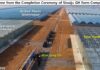


North Korea is celebrating the groundbreaking of a new road bridge connecting to Russia across the Tumen River, describing it with characteristic understatement as providing a “substantial guarantee” for economic cooperation. The 850-meter structure, scheduled for completion by 2026, represents the latest infrastructure project in the blossoming romance between Kim Jong Un and Vladimir Putin following their comprehensive strategic partnership treaty signed last year.
In a ceremony attended virtually by both nations’ prime ministers (because nothing says “we’re serious about this relationship” quite like a video call), Premier Pak Thae Song declared the bridge would lay “an eternal foundation” for partnership between the countries. An “eternal foundation” seems like a heavy burden for a simple road bridge, but perhaps engineering standards are different north of the 38th parallel.
The KCNA helpfully explained that the bridge will “vitalize bilateral cooperation” in areas including “travel of persons, tourism and circulation of commodities.” One imagines the tourism brochures: “Visit scenic North Korea! Marvel at our statues! Enjoy strictly supervised walks through pre-approved areas!”
As military cooperation deepens between these two nations, this transportation link arrives with convenient timing. After all, sending troops to support your friend’s war effort is much easier when you don’t have to worry about river crossings. The “many-sided” cooperation mentioned likely doesn’t include concepts like press freedom or competitive elections, but nobody’s perfect.
With construction now underway, the world watches as two authoritarian regimes build bridges—both literal and metaphorical—while systematically burning bridges with much of the international community.
Note: This is an opinion column offering a wry perspective on North Korea — where actual facts meet playful commentary.