

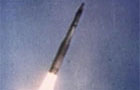
Even if North Korea carries through the anticipated launch of its Taepodong-2 missile between the 4th and 8th of April, in violation of a United Nations Security Council resolution, it will be difficult for international society to impose effective disciplinary measures on the country.
Ultimately this brinkmanship by the North, aiming to achieve internal solidarity and to strengthen its leverage with outside powers through such provocative acts, will most likely garner yet another diplomatic victory.
This is because even if the North’s missile launch is presented to the U.N. Security Council (UNSC), the U.N. will almost certainly not be able to impose any new sanctions on the country due to Russian and Chinese vetoes.
The passivity with which international society approaches sanctions on North Korea, and the probable willingness of Russia and China to wield their veto powers, partially stems from the lack of a consensus among nations regarding whether the projectile is a missile or an artificial satellite.
If the North launches the Taepodong-2, the U.S., South Korea, and Japan have repeatedly made clear that tougher sanctions will be needed because it is a violation of UNSC Resolution 1718.
At the high-level officials meeting between the U.S., South Korea, and Japan on their North Korea policies which was held in Washington D.C. on the 27th, the three nations reportedly agreed on the necessity of referring the issue to the U.N. Security Council if the North launches a rocket.
In the meantime, however, China and Russia, who have consistently harbored lukewarm views on the issue, have appeared more-or-less undecided about sanctions. However, Radio Free Asia (RFA) reported on the 28th that Russia has informed the U.S of its position; that the North’s launch of a satellite is not a violation of UNSC Resolution 1718.
North Korea itself has shown its resistance in a strong tone. Rodong Shinmun, the organ of North Korea’s Workers’ Party, reported on the 29th that if this matter is dealt with in the UN Security Council then denuclearization and the Six Party Talks would be completely ruptured and the North could be forced to take even stronger measures.
Japan’s Mainichi News relayed on the 28th that the Chinese Assistant Foreign Minister Hu Zheng Yue (胡正躍), in a vice-ministerial security meeting with Kenichiro Sasae (佐佐江賢一郞) at the Japanese Foreign Ministry’s Asian and Oceanian Affairs Bureau on the 27th, requested a cool response from Japan, noting, “It is important for the North to take part in the Six Party Talks.”
In other words, China’s position is that rather than imposing sanctions for the missile launch, exploring a diplomatic solution by promoting dialogue is more important at this point.
With the differences between the stances of related countries becoming clear, the prevailing perspective in diplomatic circles is that submitting a new UN Security Council Resolution on sanctions against the North is not a possibility at this point. Accordingly, the idea of reviving those sanctions laid out in UNSC Resolution 1718, which had become virtually toothless, has been gaining traction.
U.N. Security Council Resolution 1718, which was adopted in 2006, contains measures such as prohibiting all member states from supplying, selling or transferring all items, materials, equipment, goods or technology of a nuclear, ballistic missile or other weapons of mass destruction-related nature using vessels or aircraft under their flag.
However, if the North launches a projectile in the form of a satellite, it will be difficult to carry out even these measures. It is a fact that if a sanctions committee tries to select new targets for sanctions, the decisions must be backed up at least by an official statement or a media explanation.
That is, if the projectile is ascertained to be a missile, it will be difficult for China and Russia to oppose sanctions, so submission of a statement for toughening existing sanctions will be possible, but if it is found to be a satellite, then implementing even these steps will be difficult, hence North Korea’s efforts to convince the world that the event is the launch of a satellite.
So, the continuing challenges encountered by the international community on imposing sanctions have caused concerns that North Korea’s threat-based strategy will succeed through its firing of the Taepodong-2 to resurface.
If the North succeeds with its launch, South Korea, the U.S., and others will raise their vocal criticism of the North, but realistically they will go down the road that has the best chance of securing a promise of a moratorium from the North. In this process, one cannot rule out the possibility of the North receiving compensation rather than chastisement for its bad behavior.
Also, in this process, the North may try to lead the U.S. into bilateral talks. Even if the stalled Six Party Talks resume then the North, which has successfully enhanced its ballistic missile capability, will propose a moratorium on launches, requiring the U.S. to make another concession.
A “successful” Taepodong-2 launch, from the North’s position, is no different from a celebratory cannon salute for earning the status of “nuclear state,” a country which has acquired nuclear materials, transport vehicles, and even nuclear warheads. It seems apparent that, according to the North’s logic, the title of nuclear state should be accompanied by commensurate compensation from the international community.
On the other hand, if the launch is unsuccessful not much will change. North Korea may continue to demand concessions from the U.S. or insist on its position as a nuclear state because it has already obtained the ability to threaten the U.S. anytime with a missile. Additionally, there is the possibility that it will even attempt a second round of nuclear experiments.
Therefore, the U.S. has emphasized its desire to have a direct dialogue with North Korea in an interview Special Representative for North Korea Policy Stephen Bosworth gave to the Washington Post on the 28th.
Professor of North Korean Studies at Korea University Yoo Ho Yul said, “There is no other way but through U.N. Security Council Resolution 1718. Kim Jong Il will achieve the results of internal solidarity and of higher momentum for negotiations with other countries if it succeeds.”
Professor Yoo estimated, “In the long run, the North Korean regime may lose trust from the international community like the U.S. and China. The launch of the Taepodong-2 may make the international community reluctant to aid North Korea.
He added, “This chance may cause the U.S. to be more wary of North Korea.”









